Happiness in daily life in South Korea

Last August Jussi Poikkeus left for South Korea to volunteer for a year. Now, around the midpoint of his volunteering period he feels he has learned a lot about the world as well as himself.

 1. Hi Jussi! What kind of tasks has did you have in March?

From the beginning of the project, my work tasks have been very structured; each day of the week follows its own agenda. For example on Mondays I work in a library and in a restaurant for retired people, but on Wednesdays I spend my day in a kindergarten. On top of these tasks, my week includes supporting children with disabilities and teaching English to seniors. March hasn’t differed much from the previous months in regard to work tasks; still, I’ve noticed that I’ve gotten more responsibility.

2. What are your expectations for the rest of your volunteering period as well as the year?

Now that’s a tricky question! Of course I’m hoping to develop my skills in Korean even more, but I wouldn’t dare set the bar too high anymore. My priority is to create more lasting friendships with locals. When I get back home in autumn, I’m planning to continue my studies at the university, including the Korean language.

3. Maailmanvaihto is working to advance intercultural understanding. What do you think is the volunteers’ role in this?

Maailmanvaihto’s activities have their base in volunteering, so the role of the volunteers in building intercultural understanding is substantial. The volunteer is often perceived as a representative of their home country and culture, which is why their acts and behavior are viewed in relation to the conception locals have of those things. However, this doesn’t mean that we as volunteers should carefully plan our every step, but rather bring forward our cultural attributes as we see fit.

Volunteering opens the door to the so-called grass-roots level of daily life, which for example an ordinary tourist can’t access. Working with local people offers a glimpse below the surface, which helps to understand the traditions, cultures and beliefs of the destination country better than tourist attractions.

4. How would you like to see Maailmanvaihto’s activities evolve in the future?

I think Maailmanvaihto is already a very nicely functioning organization. I guess I’m a bit lame for not coming up with anything to improve. Maybe that’s a good sign. Still, if I have to say something, I hope that Maailmanvaihto remains a small organization. For us volunteers it’s comforting to know that we are looked after in our home country!

5. What is your own experience of intercultural learning in Maailmanvaihto’s activities?

It’s hard to describe how much the past six months have taught me. For my part, intercultural learning has covered more than just Finland and South Korea, as I spend a great deal of my time with other volunteers, especially with my French flatmate. The local cultural environment shares many common features with Finland, but it also has its differences. I think here respect and being considerate towards others is something else entirely. For example, even though the metros are often crammed, people make room for everyone who wants to get in.

6. Three reasons to join Maailmanvaihto’s activities?

Three amongst a multitude, right. Well, internationality, expanding your worldview and finding yourself. Before participating in the volunteering project I used to dream about living abroad; because of the project I finally had a chance to do that. It is still impossible to say how much my understanding of the world has changed during my stay, I believe I’ll notice that better after I have returned to Finland. I would say the same thing about myself; I’ve learned to read my mind and find new aspects of my personality, but the process will be brought to an end in Finland. Happiness is found in the daily life, small acts matter and you learn from your mistakes. I don’t regret coming here a bit, thank you Maailmanvaihto.

Finally, your greetings to the 60-year-old Maailmanvaihto?

Let’s continue in the same way and not let the fire die down despite the old age. Congratulations Maailmanvaihto 60 years!

Photo: Jussi enjoying the weekend off with his colleague’s firstborn son. 

The article series My anniversary year presents once a month during Maailmanvaihto’s 60th anniversary year what’s going on in the lives of people connected with the organization. The anniversary year is filled with different kinds of activities and people!

Jussi participates in International Cultural Youth Exchange program (ICYE), where volunteers work for 6 or 12 months in Asia, Africa, Latin America or Oceania. As an ICYE-volunteer you get to see the world and build intercultural understanding on a grass-roots level. Read more about ICYE!

Read also

English lessons and club activities at a primary school

In April, Max Schodry was looking forward to volunteering for...

A glimpse of a host family’s new ordinary

Last August Salla Jarkkola, Tuukka Kosola and their children became...

A new position as chair and the first meeting

How has the 60th anniversary year of Maailmanvaihto begun? Roosa...

Tackling racism requires common acts

Racism can only be combated by unity, that is the idea behind United for Intercultural Action (UNITED), the European network against nationalism, racism, fascism and in support of migrants, refugees and minorities. We asked Ana López Carlassare from UNITED to share thoughts about Europe’s situation from UNITED’s point of view.

In 1945, Europe thought to have defeated fascism, but nationalist, fascist, anti-Semitic and xenophobic ideologies still remain alive in today’s political rhetoric. Although the way fascism is voiced has drastically changed, the basic characteristics of fascism and the methods for gaining support from the wider public remain the same: populism is a virus. And in the whole continent this plague has reappeared, changing its colors depending on the context and has reached a strong presence even in countries with strong democratic traditions.

Fascist ideas gain support among different social groups especially in times of political and economical crisis, destroy democratic liberties and discriminate members of specific minorities and people with different views. People are looking for someone to blame. Hate not only leads to violence, discrimination and exclusion, but is a dangerous threat to democracy and peace as well.

Opinions are hardening in the public discussion

All over Europe, there are politicians who find numerous threats against their respective societies, and these threats are almost always ‘foreign’, from outside the dominant social group. According to these politicians and leaders, they are the only ones that are capable of finding appropriate ‘solutions’ to the problems in society; and they offer a solution which rejects all that is different. The hardening opinions in the field of politics make it clear, that Europe today is facing many different forms of racism, xenophobia, anti-migrant and anti-minority attitudes resulting in exclusion, hate speech, and in extreme cases in hate crimes.

Fallout from the on-going economic and fiscal crisis, coupled with the heightened threat of terrorism, and the high number of refugees and migrants arriving on Europe’s shores, have combined to create an atmosphere in which racist rhetoric and far-right extremism are thriving. As multiple crises engulf Europe, many people are questioning their commitment to the shared European values of democracy, human rights and tolerance that have been at the heart of the European project since the end of the Second World War. Meanwhile, a record number of people trying to reach Europe for safer life continue to see their human rights violated.

Attitudes can be deeply rooted in the culture

Furthermore, racism and discrimination are also found in commonly used cultural expressions. Racism is not just an isolated act, but part of a collective, continuing system of social relations. It is not always easy to see; sometimes we need each other to point discrimination out to us.

“We can change the way society looks at differences.“

People in a rapidly changing society have the tendency to become protective of what is known and fearful for what is unknown. Dividing and categorising “others” into over-generalised groups as well as only selecting “the similar” in the core group is deeply embedded in our societies and everyday activities. Racism and exclusion can take the form of a negative look in the subway, or crossing the street to avoid someone, or portraying people with certain words, images, etc. based on prejudices instead of individual capacities. We should rethink why we give voice to these prejudices and perceive others as lesser beings.

We can change the way society looks at differences. Effective anti-racism is a joint effort; we start by opening up our own minds and then encourage those around us to see another future. It takes courage to speak out against exclusion, discrimination, hate and racism wherever we see it: in our streets, at our schools, on the Internet, in the media, or within our institutions and governments. It takes an open mind to rethink discriminative tendencies in society and to change people’s view.

Taking common stand against hate of all kinds

Such a complex situation in Europe presents unprecedented challenges for the anti-racist movement. Across Europe there is a great need for individuals and organisations to challenge the ideas and warn about the dangers of the far-right, present a positive message about diversity and migration, and provide on-the-ground support for newly-arrived migrants, refugees and asylum seekers. Linked through UNITED, more than 560 organisations from a wide variety of backgrounds, fields of experience, ranging from local grassroots associations to national and international NGOs work together on a voluntary basis to take a common stand against hate of all kinds. UNITED coordinates campaigns, organises conferences, takes part in projects, produces publications and undertakes advocacy work to protest against discrimination and promote our shared vision for a diverse and inclusive society.

Though in numbers there are not many fascists throughout Europe, however, the constant voicing of xenophobic messages in media and politics causes ‘normalisation’ and leads to ‘acceptance’ of hate. Society keeps silent. People become bystanders to their own fate and to the fate of the whole European society. So, what can we do about this? We can Think. See. Listen. Speak. Protest. Resist. We can remember and make sure the past is not forgotten. Diversity is more than just living our lives next to each other. Intercultural understanding and cooperation are the goals.

UNITED is an European-wide organization founded in 1992 that coordinates, supports and strengthens a network of over 560 organisations from 46 European countries to improve intercultural communication, diversity and human rights.

Text: Ana López Carlassare

The article has been published in the magazine MaailmanVaihtoa – Volunteers’ Voices 1/2018.

Read also

MaailmanVaihtoa – Volunteers’ Voices 1/2023: Language and Communication

 In this issue Read the pdf version of the...

Greetings from abroad: From Finland to Austria and from Taiwan to Finland

Each year Maailmanvaihto sends and receives young people for long-term...

Towards Meaningful Meetings in Volunteering

In international volunteering the participants learn through daily co-operation. At...

My volunteer work in Finland

Hi, I am Po-Hsien from Taiwan. Now I am doing volunteer work in a primary school and a folk high school in Karstula. I just come to here this January and will stay until next January. I would like to share my experience in this blog.

>> Read the blog of Po-Hsien (in Chinese)

The blog is from the season 2017–18. Po-Hsien participates in the International Cultural Youth Exchange (ICYE) program. Maailmanvaihto receives ICYE volunteers for volunteer periods of 6–12 months. Would you be interested in participating? Read more about the ICYE program and apply!

Read also

Greetings from abroad! From Taiwan to Finland

I went because... I wanted to experience a different lifestyle...

Keeping in touch after volunteering

The end of the international volunteering period often marks a...

ESC volunteering at Maailmanvaihto: a joint learning experience

This year, for the first time, a European Solidarity Corps...

Photo contest: fellowship in international volunteering

Has a memory of a significant meeting during an international volunteering period stuck with you? Enter the photography contest to win movie tickets!

Maailmanvaihto has its 60th anniversary this year. Over the course of years we have worked for advancing intercultural understanding. When we nowadays send and receive young adults for international volunteering periods, the core aims in our activities are still promoting meaningful meetings and co-operation that help to create a deeper understanding between people.

To celebrate the anniversary, we are organizing a photography contest featuring significant meetings during international volunteering. You are welcome to enter the contest if you have participated in international volunteering activities as a volunteer, a host family or a support person for a volunteer or a member of a work community which received a volunteer.

Participate by April 15, 2018 by posting a photo by you on the theme on Instagram with #volunteeringfellowship and tagging @maailmanvaihto in it (NB! your account must be public). You can participate with a picture of a joint activity or some other nice shared moment with someone. Let’s come together to make visible the connections and co-operation!

Attach a short text describing the photo. You can also send the photo to us at harjoittelija@maailmanvaihto.fi. Two randomly selected participants will win 2 movie tickets!

Also, remember to follow Maailmanvaihto on Instagram!

Contest rules

The entry period begins on March 23 and ends on April 15, 2018. The theme of the contest is significant meetings in international volunteering. The picture has to be appropriate to enter the contest; distasteful and inappropriate pictures will be disqualified. Any identifiable people featured in the photo must be asked for a permission before publishing (in case of minors a permission must be asked also from their guardian). Permission must also be asked when mentioning someone by name in the description. A participant may enter the contest only once with one picture.

You can enter the contest by posting a photo you have taken on the theme with hashtag #volunteeringfellowship and tagging @maailmanvaihto in it. Please note that your account has to be public for your entry to be eligible to the contest. You can also send the photo to us via e-mail at harjoittelija@maailmanvaihto.fi. Please also include a short text describing the photo.

Any natural person currently living in Finland is eligible to enter the contest, if they have participated in international volunteering as a volunteer, a host family, a support person or a representative of a voluntary workplace. Maailmanvaihto’s employees cannot enter the contest. Minors must have a permission from their guardian to enter. Participants entering via Instagram must be over 13 years old.

Two randomly selected participants will win movie ticket packages including 2 Finnkino’s printable vouchers (valid until Sept 2018). The winners will be selected during seven days following the end of the entry period. The winners will be notified in person via Direct Message on Instagram or via e-mail at the address they sent their entry from. The vouchers will be sent via e-mail at the addresses the winners provide. If the winner cannot be reached in 7 days, a new winner will be selected.

The participants’ names, usernames or contact information will not be published, stored or used in direct marketing. The winning pictures may be published in Maailmanvaihto’s communication channels but without the winners’ names or usernames.

The contest is organized by Maailmanvaihto. The organizer can disqualify a participant if they do not comply to the rules. Instagram and Facebook do not sponsor, recommend or administer the contest. Maailmanvaihto releases Instagram and Facebook from all responsibility regarding the contest.

Read also

Practice languages in Maailmanvaihto’s Language Café

Would you like to practice speaking in Spanish or Finnish...

Answer to the reader survey of the magazine MaailmanVaihtoa – Volunteers’ Voices!

Do you read the magazine MaailmanVaihtoa – Volunteers' Voices? Answer...

Stand for election! New board members of the Maailmanvaihto Board will be elected 9 Nov 2026

Would you like to join us in steering the activities...

Maailmanvaihto’s Autumn Meeting 9 November 2026

Dear members of Maailmanvaihto and participants of our activities, a...

Intercultural Learning and Pristine Beaches

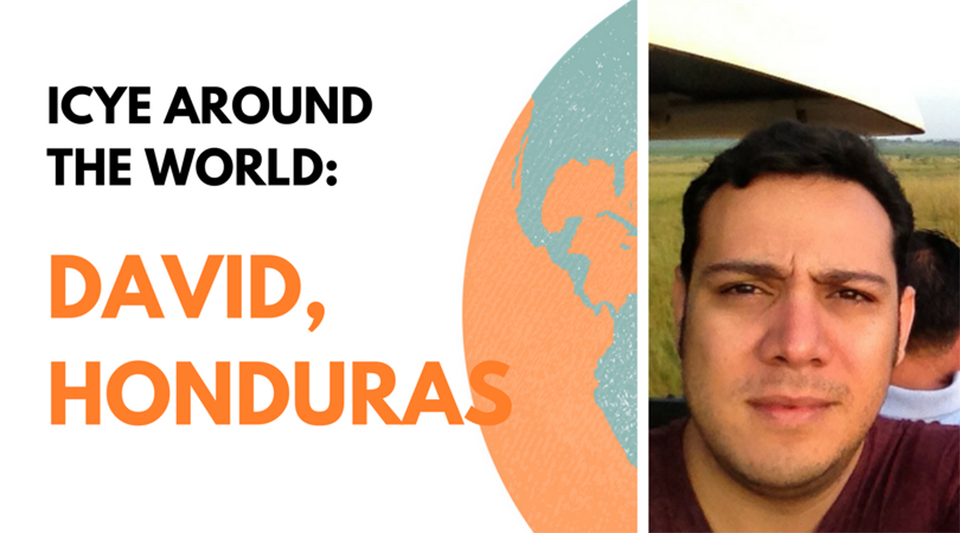
In this series we catch up with members of the International Cultural Youth Exchange offices around the world. This time we chat with David Baires from ICYE Honduras.

Hey! Could you introduce yourself and your job in ICYE Honduras?

My name is David Baires, I am the Excutive Director of ICYE Honduras. I have been working with ICYE since 2003 – after my wonderful experience as a volunteer on 1998–1999 in UK. I am responsible for overall management of all the programmes and organisational aspects in ICYE Honduras.

What is the most rewarding about your job?

Being a volunteer is a very rewarding action, which helps people with special needs and gives meaning to one’s life. It is very special to see the changes that ICYE’s experience makes on young people, making them mature, global
citizens who care about others. Being ICYEer means a lot to me and I am sure that our work is a contribution of a grain of sand to achieve a better world.

‘‘Being ICYEer means a lot to me and I am sure that our work is a contribution of a grain of sand to achieve a better world.’’

ICYE Honduras recently received a Finnish volunteer Jonna to work in Honduras as a long-term volunteer. Could you tell us about her project?

Our long-term Finnish volunteer Jonna will be doing a voluntary service during ten months in a non-profit organisation with the main aim of providing entrepreneurial consultancy to micro, small and medium-sized enterprises, with the purpose of generating an economic impact and improving the dynamics of business in the region of Lempa, where Lencas, one of the biggest ethnic-indigenous groups of Honduras, live.

In what kind of projects will the other foreign volunteers be volunteering?

The other long-term international volunteers from Austria, Ecuador, Slovakia and Switzerland will be doing voluntary services in different projects that work with various vulnerable populations and social causes of Honduras. They will be in non-profit organisations working, for example, for conservation of the environment, provision of education to the indigenous youth and children with special needs and provision of free cancer treatment to children from low economic resource families.

How big a role does food play in Honduras, for example when visiting a Honduran family?

Food plays a big role in Honduras as it is intrinsic in our culture. Honduran cuisine is very much varied as it contains elements that come from our indigenous ancestors, Spanish traditions brought during Colonial times, creole customs, and African-descendant cooking styles. When visiting a Honduran family, you’ll most likely be invited to eat something and most likely the dish will be served with fresh tortillas, as well as enjoying a good cup of coffee.

Your greetings to a person who is planning to volunteer in Honduras?

Come and have a unique and authentic intercultural learning and volunteering experience in the heart of Central America! Honduras is a thriving nation with captivating characteristics such as ethnic diversity, tropical nature and pristine beaches, several national parks and historical monuments. Discover the greatness of this nation with welcoming people, and experience various ways of being and living in its different regions embracing diversity!

Text: Kaisa Rahko, photo: from album of David Baires

Juttu on julkaistu MaailmanVaihtoa 2/2017 -lehdessä.

Read also

MaailmanVaihtoa – Volunteers’ Voices 2/2025: Environment and International Volunteering

Read the magazine in pdf. In this issue: Pääkirjoitus /...

Vounteers’ Voices 2/2023: Decolonising international volunteering

Read the issue in pdf In this issue 4 Pääkirjoitus...

MaailmanVaihtoa – Volunteers’ Voices 1/2023: Language and Communication

 In this issue Read the pdf version of the...

A glimpse of a host family’s new ordinary

Last August Salla Jarkkola, Tuukka Kosola and their children became a host family to Marija, a volunteer from Latvia. Now they talk about their February as a part of Maailmanvaihto’s activities.

1. Hi Tuukka and Salla! What kind of tasks did you have in February?

February went by quite ordinarily; we said hello and caught up with Marija whenever we happened to be home and awake at the same time. Our son James likes to take Marija upstairs to play with cars or trains. In addition, Marija looked after the house when the rest of the family was on winter vacation. In the beginning of March we celebrated Marija’s birthday by eating together. Chris, Marija’s volunteer friend from German was also with us.

2. What are your expectations for this year?

We hope that our easy-going coexistence continues. We also hope that we will get to share more trips and attend various events with Marija.

3. Maailmanvaihto is working to advance intercultural understanding. What do you think is the role of the host families in this?

Thanks to the host families, young people can come to Finland, get acquainted with the country’s cultural environment and local people as well as share their own cultural background others. In families with children, also the kids get to meet someone who speaks a different language and has grown up in a different environment, and learn to communicate with them.

4. How would you like to see Maailmanvaihto’s activities evolve in the future?

We have been quite happy with Maailmanvaihto’s activities as they are.

5. What is your own experience of intercultural learning in Maailmanvaihto’s activities?

Although Marija is a so-called modern youth, she appreciates old Latvian traditions, such as songs, dances and dishes. To our delight, we have got acquainted with these a bit through Marija.

6. Three reasons to join Maailmanvaihto’s activities?

1. Because you can. 2. Getting to know new people 3. Improving your language skills

Finally, your greetings to the 60-year-old Maailmanvaihto?

Keep up the good work!

Photo: The host family celebrating Marija’s birthday. From left to right: Marija, Chris, Tuukka, Justiina and James.

The article series My anniversary year presents once a month during Maailmanvaihto’s 60th anniversary year what’s going on in the lives of people connected with the organization. The anniversary year is filled with different kinds of activities and people!

Maailmanvaihto receives annually about thirty young foreigners to volunteer in Finland for 6 to 12 months.  The host families present the volunteers with a unique opportunity to get familiar with the local way of living. The families that open their doors to a volunteer get a new friend and a chance to see their own neighborhood from a new perspective. Read more and apply to become a host family!

Read also

Tim Dieltiens: EVS as a lifeline

The speech of EVS volunteer Tim Dielties at the 60th...

Photos: Maailmanvaihto’s 60th anniversary year celebration

Maailmanvaihto's 60th anniversary year celebration was held on 25th of...

English lessons and club activities at a primary school

In April, Max Schodry was looking forward to volunteering for...

Volunteers’ Voices 1/2018: 60 years of making a difference

Editorial: 60 years of experiences

The 6th of August in 1958 was special for at least two Finnish young people. On that particular day two students, Kaija-Liisa Käyhty and Markku Pohjola, took step on an inter-Atlantic ship. An exchange year in the United States awaited on the other side of the ocean. Kaija-Liisa and Markku were the first students that Maailmanvaihto (then International Christian Youth Exchange) ever sent out to the world.

After their return the pair had a lot to tell as in the 50s gaining information on foreign countries was somewhat challenging: The Finnish Broadcasting company (YLE) had only recently started regular television broadcasting and the internet was only discussed behind the closed doors of the Pentagon. Holidays on the Canary Islands or Spain were a rare treat. In addition to all this, the walls of the cold war had risen to cast a shade on the world and made it hard to see what life somewhere else could actually look like.

But let’s fast-forward six decades further, until 2014 to be exact. The 6th of August is once again a special day for at least one Finnish young person: me. This time though there was no boat trip or school year across the seas waiting, but a morning flight towards Asia to start a volunteering period in Nepal. Unlike Kaija-Liisa and Markku, I had plenty of resources to help me prepare for my trip. I followed local media on Twitter, TripAdvisor gave me tips on the best tourist attractions, WikiTravel instructed on local etiquette and a handful of online articles described the main plot line of religion and politics in Nepal. I got to know my host family in advance on Facebook and snooped around my volunteering project through the satellite cameras or Google Maps. One could easily imagine that I knew everything there was to know even before my travel. Nevertheless, in 2015 I returned a hundred times wiser.
Nothing beats the authentic experience.

Maailmanvaihto is turning 60 years old this year. This magazine is an ode to those six decades of making a difference. I wish you enjoyable reading moments!

Roosa Kontiokari
The chair of Maailmanvaihto

In the issue

2: Pääkirjoitus 60 vuotta kokemuksia – Roosa Kontiokari
6 Kutsu kevätkokoukseen – Kokous pidetään 22. maaliskuuta.
7 Ajankohtaiset uutiset – Kesällä valmennusleirille ohjaajaksi tai keittiötyöntekijäksi!
TEEMA: 60 vuotta vaikuttavuutta
THEME: 60 years of making a difference
— 12 Maailmanvaihdon historiaa – Pikakelaus 40-luvun lopulta tähän päivään.
— 14 40 vuotta Maailmanvaihdon matkassa – Outi Pesola kertoo vuosistaan ICYE:n mukana.
— 16 Mitä jäi käteen? – Maailmanvaihdon toimintaan viime vuosikymmenillä osallistuneet kertovat.
19 Tackling racism requires common acts – Ana López Carlassare
22 Vapaaehtoistyö ja rasisminvastaisuuden edistäminen? – Alma Smolander
24 Reittejä maailmalle – Kaksi vapaaehtoista kertoo arjen vaihtamisesta.
26 Feeling young in a youth organization – Haastattelussa ICYE Ugandan Semakula Stuart George.
28 Tule mukaan toimintaan – Tutustu mahdollisuuksiin Suomessa ja ulkomailla!
29 Arkea ja juhlaa tukiperheenä – Tukiperhe tukee auringonpaisteessa ja tuulisilla säillä.
34 Näkökulma: Kisälli ja Euroopan kokoinen ystäväpiiri – Mauri Pajunen
35 Tapahtumakalenteri – 60-vuotiasta Maailmavaihtoa juhlitaan elokuussa.

ISSN 2342-2629 (Printed)
ISSN 2342-2637 (Online publication)

Read also

MaailmanVaihtoa – Volunteers’ Voices 2/2025: Environment and International Volunteering

Read the magazine in pdf. In this issue: Pääkirjoitus /...

Vounteers’ Voices 2/2023: Decolonising international volunteering

Read the issue in pdf In this issue 4 Pääkirjoitus...

MaailmanVaihtoa – Volunteers’ Voices 1/2023: Language and Communication

 In this issue Read the pdf version of the...

From Feeding Volunteers to Making a Living

Hungarian Ildikó Lászlóffy came to Finland to volunteer four years ago. Ildiko enjoys cooking and is nowadays almost a permanent sight in the kitchen team of Maailmanvaihto’s camps. Volunteering also gave her inspiration for her future’s profession. Read, what she tells about her experiences!

I am Ildi, Maailmanvaihto’s very own quirky Hungarian who also tends to cook in the camps and enjoys making inappropriate jokes. I came here four years ago as a volunteer. I worked in Luovilla, a textile workshop for people with learning disabilities or difficulties. After my volunteer year ended, I decided to stay in Finland and be active with Maailmanvaihto’s activities since I enjoyed them greatly and found them a good opportunity to get to know new people from all around the world.

‘‘This experience made me sure of what I want to do in life – learn, cook, widen my horizons and always help the “underdogs”, everywhere.’’

I have been part of Maailmanvaihto’s kitchen team in several camps and worked with different people from different countries. In these camps, I have learned that people are not that scary and socialising can actually be fun. But being more serious, these camps actually opened me up a lot. When I came here and went to my first camp I was thinking sarcasticly ”great, now I have to play games and talk, yay!” but after some days I had a conversation with myself. Am I going to try to have a nice time here and enjoy the activities or what? I’ve listened to my better self and thanks to that, I still consider my first camp as one of my dearest memories in my life. There was no question that I wanted to return and meet new friends, because every encounter would teach and develop me.

Without my volunteering background I don’t think I would nowadays be studying to become a cook. I have enjoyed cooking since my childhood but never seriously thought about bringing it to the next level. I have played with the idea of becoming a cook, but I thought it would be very hard physically and maybe it would kill out the passion of me if I had to do it professionally for long working days. I have a diploma in a very different field and it wasn’t easy to find work in that field, so I was really thinking about studying something a bit more practical.

Cooking in the camps is not equal to a job in a restaurant but it’s also quite a hard work – with a lot of extra fun. And I loved it. One day I had my enlightment – hey, why wouldn’t I actually try to apply for a cooking school? The camps had given me some ideas on what it is like to be a cook: it’s tiring but I love it. So I decided to give it a try and don’t regret it a bit.

Volunteering abroad can affect one’s life a lot. It’s such a cliché that the world opens up, but it’s true. I moved to a foreign country for the first time in my life. I met very different cultures and people for the first time in my life. I could never go back and be the person who I used to be living in her small world in her home city. This experience made me sure of what I want to do in life – learn, cook, widen my horizons, work with disabled people, improve myself and always help the ”underdogs”, everywhere.

If I would give some tip to people who are planning to volunteer in Finland or abroad, it would be ”Do it!”. It is going to be one of the biggest adventures in your life, for sure it was for me! It is not always easy but volunteering definitely changed my life and I consider it the best decision I have ever made. Be open and try out new things you never thought you would! For me, one of these things was going to a sauna naked – oh my – but I did it and survived it!

Text: Ildikó Lászlóffy, photos: Kaisa Rahko and Minna Räisänen


The article has been published in MaailmanVaihtoa – Volunteers’ Voices 2/2017 magazine.

Would you like to join in the kitchen team of a training camp of Maailmanvaihto? Read more and contact us!

Read also

A glimpse of a host family’s new ordinary

Last August Salla Jarkkola, Tuukka Kosola and their children became...

A new position as chair and the first meeting

How has the 60th anniversary year of Maailmanvaihto begun? Roosa...

Volunteering in Finland: On-Arrival Camp Impressions

Welcome to Finland! Every August Maailmanvaihto organises a 10-day On-Arrival Training for the incoming volunteers. At the training the volunteers are given an introduction to topics like the Finnish language and volunteering in the Finnish context. They also become familiar with their peer volunteers and Maailmanvaihto’s co-workers and staff. How was the camp in 2017? The participants tell. [Maailmanvaihto – ICYE Finland]

Music: Guitalele’s Happy Place by Stefan Kartenberg (c) copyright 2017 Licensed under a Creative Commons Attribution (3.0) license. http://dig.ccmixter.org/files/JeffSpeed68/56194 Ft: Kara Square (mindmapthat)

Read also

Practice languages in Maailmanvaihto’s Language Café

Would you like to practice speaking in Spanish or Finnish...

Answer to the reader survey of the magazine MaailmanVaihtoa – Volunteers’ Voices!

Do you read the magazine MaailmanVaihtoa – Volunteers' Voices? Answer...

Stand for election! New board members of the Maailmanvaihto Board will be elected 9 Nov 2026

Would you like to join us in steering the activities...

Maailmanvaihto’s Autumn Meeting 9 November 2026

Dear members of Maailmanvaihto and participants of our activities, a...

A new position as chair and the first meeting

How has the 60th anniversary year of Maailmanvaihto begun? Roosa Kontiokari, the chair of the board of the organization, talks about her January.

1. Hi Roosa! What kind of tasks did you have in January?

I ran the first board meeting of the year – and of my term as chair! Before the meeting I had familiarized myself with my new role with the help of our Secretary General Anni Koskela. The most rewarding thing in January was to get started with the new position and to begin laying out plans for the year.

2. What are your expectations for this year?
I’m looking forward to anything that working on the board during the anniversary year brings with it. I’m sure I will learn a great deal about organizational activities as well as international volunteering. Of course I’m also looking forward to meeting the new volunteers.

3. Maailmanvaihto is working to advance intercultural understanding. What do you think is the board’s role in this?

Building intercultural understanding is one of Maailmanvaihto’s core aims and as such it has to act as a basis for all decisions made by the board. This ensures that Maailmanvaihto’s activities as an organization promotes intercultural understanding in a society.

4. How would you like to see Maailmanvaihto’s activities evolve in the future?

Long-term international volunteering can provide incredibly valuable learning experiences for the volunteers themselves as well as for the people around them. However, only a few understands or even knows about that. My hope for the future is that more people will get to hear about the amazing experiences that people have had through Maailmanvaihto’s activities.

5. What is your own experience of intercultural learning in Maailmanvaihto’s activities?

People in different cultures see the world from different perspectives, but in the end humanity and humanness is the same – regardless of where in the world you are.

6. Three reasons to join Maailmanvaihto’s activities?

International experiences, positive atmosphere and great people.

Finally, your greetings to the 60-year-old Maailmanvaihto?

Congratulations on the anniversary! Keep up the good work and remember to enjoy the anniversary year.

Photo: The first meeting of Maailmanvaihto’s board was held in January. Roosa Kontiokari in the middle in the photo.

The article series My anniversary year presents once a month during Maailmanvaihto’s 60th anniversary year what’s going on in the lives of people connected with the organization. The anniversary year is filled with different kinds of activities and people!

Read also

Tim Dieltiens: EVS as a lifeline

The speech of EVS volunteer Tim Dielties at the 60th...

Photos: Maailmanvaihto’s 60th anniversary year celebration

Maailmanvaihto's 60th anniversary year celebration was held on 25th of...

English lessons and club activities at a primary school

In April, Max Schodry was looking forward to volunteering for...