Maailmanvaihto – ICYE Finland’s strategy 2022–2027

1. What is Maailmanvaihto – ICYE Finland?

Maailmanvaihto – ICYE Finland is a religiously and politically non-affiliated organisation that sends young adults abroad to do volunteer work for extended periods of time (6 to 12 months) and receives volunteers from abroad to Finland. The volunteers work in common-good organisations. The long-lasting volunteering builds intercultural understanding, offering the participants the opportunity for challenging learning experiences and personal growth.

Established in 1958, Maailmanvaihto – ICYE Finland is a part of the International Cultural Youth Exchange (ICYE) federation, which is an international cooperation network of 39 organisations. The values of ICYE highlight the building of peace and understanding between cultures. In addition to the ICYE volunteer programme, ICYE Finland receives and sends volunteers through the EU-funded European Solidarity Corps (ESC) programme. A few volunteers also arrive yearly from Germany through the Internationaler Jugendfreiwilligendienst (IJFD) programme.

Three permanent employees manage the daily operations of Maailmanvaihto – ICYE Finland. These members of staff are assisted by a changing number of trainees and office volunteers. The board is in charge of the decision making within the organisation. Furthermore, volunteers take part in the execution of events, in communication tasks, in the interviewing of the volunteering candidates, and in school visits and camp activities.

2. The operational environment of Maailmanvaihto – ICYE Finland*

The operation of Maailmanvaihto – ICYE Finland is based on internationality, and hence all global trends affect indirectly and directly also the operational environment of ICYE Finland. In recent years, especially the acceleration of climate change, pandemics, the increase in inequality, and political instability have all had an impact also on the field of volunteer work. Unstable conditions affect both organisational and individual financial resources: the increasing inequality in the financial opportunities of the young people who are interested in volunteer work is even more palpable than before, and organisations need to consider sustainable solutions for the continuation of their operations themselves.

Likewise, working life is globally marked by insecurity and instability: alongside the diversification of work and learning, education is marked by the pressure to generate workforce at a fast speed. This results in pupils and students having to make future-defining decisions earlier and earlier. On the other hand, in the development of one’s learning, for example meta-skills are highlighted (especially the ability to learn). Related to this, the international volunteering programmes of ICYE Finland can be presented as a way of developing diverse know-how and skills required in working life. The long-term experiences provided by ICYE Finland can stand out in today’s fragmented society.

The rapid development of communications and telecommunications technology has affected especially the growing media transmission of individuals and the society. This is also an environment, to which ICYE Finland should pay particular attention to when developing its operations. The use of technology allows not only more close knit international cooperation, but also the reaching of a wider domestic audience with a receptive value base. While utilising the digital tools available, attention should also be paid to the quality and reach of local activities, so that the organisational operations on the one hand reach an increasingly diverse range of participants, and on the other, engage the coworkers to long-term activity within the organisation. Value based transnational cooperation between organisations and individuals is an opportunity for ICYE Finland to expand its sphere of influence and perhaps even a prerequisite for the continuation of its own operation in the fields of organisational and civil activism.

3. The vision of Maailmanvaihto – ICYE Finland

“For a more equal world through intercultural learning”

4. The mission statement and values of Maailmanvaihto – ICYE Finland

“Maailmanvaihto – ICYE Finland organises intercultural learning experiences for young adults and promotes their social growth and personal development. Maailmanvaihto – ICYE Finland promotes intercultural understanding, equality and peace in the world.”
The activities of ICYE Finland are based on the following values:

  1. Global responsibility. Participating in an international volunteer programme, international youth work and the activities of a youth organisation promotes the awareness and agency of young adults in development, equality, and environmental matters as well as their active role in the society.
  2. Intercultural learning. A long-term volunteer programme offers young adults an intercultural learning experience which contributes to their individual growth and provides them with new perspectives. Intercultural learning promotes equality and cooperation across cultural borders as well as supports questioning and deconstructing prejudices and stereotypes.
  3. Equality. Equality is promoted in all activities of ICYE Finland. Our activities advance cooperation between people with different backgrounds and deconstructs discriminatory thinking and structures. Our activities are inclusive and as accessible as possible for different groups regardless of any reasons related to their person.

In addition to these basic values, the work of ICYE Finland is defined by a set of operational values which are principles permeating the activities of the organisation:

  • Caring and inclusivity. We acknowledge the individual needs of the participants in our work and offer them individual support. We enable people from different backgrounds and life situations to participate in the activities of ICYE Finland.
  • Reliability and responsibility. The quality of ICYE Finland’s operations and the expertise of the organisation as the organiser of international volunteering are based on long experience and long-term cooperation networks. Monitoring the quality and ethicality of the activities is an ongoing process at the organisation. The quality and ethicality are monitored, for example, through the feedback collected regularly from the stakeholders.
  • Transparence. Transparence in communications and decision-making increase the reliability and quality of our operations.

5. Strategic objectives of Maailmanvaihto – ICYE Finland

During the last strategic period (2016–2021), ICYE Finland focused in particular on improving the quality of volunteering programmes both within the organization and within the ICYE network, developing the recognition of volunteers’ competencies, and increasing the number of participants in the European Solidarity Corps volunteering programme. During the previous strategy period, an advocacy strategy was also drawn up and the organisation’s operations were evaluated for how well equality is achieved in them.

The objectives set in the strategy were largely achieved and all the objectives set in the strategy were taken forward. For example, the development of communications, the preparation of quality descriptions and describing quality processes for our different programmes, and the quality development work of the ICYE federation succeeded remarkably. However, some of the objectives were left partially unmet and/or left in progress. The new strategy continues to develop many of the objectives of the previous strategic period, but also includes a number of new priorities.

In the new strategic period (2022–2027), ICYE Finland aims to increase the inclusivity of its activities, in particular, and work on ways to facilitate the participation of people of various backgrounds and life situations in the organisation’s activities and volunteering programmes. In addition to strengthening the organisation’s inclusivity, ICYE Finland will continue to strengthen skills related to the themes of the previous years’ Standing Together Against Racism in Europe (STAR E) project and expertise in anti-racism activity.

Recent years have shown the important role that coworkers of our NGO and volunteers play in ICYE Finland. Committed and motivated volunteers are one of the most important resources of the organisation, which is why efforts will be made to develop the activities of ICYE Finland’s actives during the next strategic period. Recruiting new coworkers, developing the board’s self-directedness and group dynamics, and highlighting volunteers’ competencies are key ways to ensure that ICYE Finland remains a vibrant and engaging organisation for all.

The strategic objectives and special objectives (A, B, C, D) for the next strategy period are as follows:

(A) Increasing inclusivity: During the next strategic period, ICYE Finland will promote the inclusivity of its activities so that young people with special needs and/or disadvantaged backgrounds have better opportunities to participate in the activities of our organisation. The number of volunteer work placements that cater to special needs and the requirements of inclusivity will be increased within the youth exchange programmes (ICYE and the European Solidarity Corps). Employees and board members of the organisation will be offered opportunities to participate in training on inclusivity.

  • We will increase understanding within the organisation about inclusivity in volunteer programmes through training and networking. In addition, we will map out our practices in relation to inclusivity, and scan for opportunities to collaborate around the theme within our ICYE and ESC networks.
  • We will create opportunities to participate in ICYE and ESC networks with the aim to better facilitate the participation of young people with special needs – such as those with sensory and physical disabilities – and other disadvantaged people, in international volunteering.
  • We will develop the inclusivity of the European Solidarity Corps volunteer selection process so that we can select more young people with special needs and other people with disadvantaged backgrounds as ESC volunteers. We will increase the number of inclusive volunteer placements in Finland that meet the needs of special support, and we will develop support practices in cooperation with experts.
  • We will scope out the possibilities of organizing European Solidarity Corps volunteer programme co-operation within Finland (in-country) in order to involve volunteers in Finland with refugee and immigrant backgrounds. We will participate in training on the topic, and discuss with other organisations their experiences, exchange information and organize an ideation session around the topic.
  • Using surveys and studies, we will map out how well ICYE Finland reaches and provides opportunities for people with special needs, such as those with sensory and physical disabilities, and how well we offer them opportunities to participate in our activities. Based on this investigation, we will develop our communication channels and methods.
  • We will map out what kind of personal backgrounds are represented in our communications’ channels and how we portray them. We will diversify the portrayals of our volunteers and other ICYE Finland actors. We will develop practices to measure and evaluate our success.
  • We will develop the accessibility of our communication channels, especially keeping in mind the visually and hearing impaired. We will use clear and easily understandable language. In addition to Finnish, we will communicate extensively in English as well, so that those with fewer Finnish skills can participate in our activities.

(B) Developing the antiracist competence of the organisation: We will continue developing the themes of the STAR-E project of the previous years as well as the antiracist competence in the activities of the organisation. On the organisational level, the established practices of ICYE Finland will be evaluated and the antiracist competence of the organisation improved through trainings (e.g. Peace Education Institute).

(C) Developing the activities of ICYE Finland’s board and actives: We will develop the group bonding of the ICYE Finland board and invest in the recruiting of new board members for example by organising introductory events. We will allocate funds in the budget to the group activities of the board.

  • We will promote the ownership and self-management of the board and consider how its resources could be increased to develop its activities.
  • We will create the role of the person responsible for group bonding who is in charge of developing the sense of community in the board, planning freetime activities for board members and improving the board’s well-being.
  • We will invite a representative of the incoming volunteers to the board meetings regularly.
  • We will consider ways to diversify the group of coworkers of ICYE Finland.

In addition, we will continue advancing the following goals in the present strategic period:

(D) Recognising the skills of the volunteers: We will continue the work started in the previous strategic period in advancing the recognition of the skills acquired through international volunteering and launch tools of identifying the skills acquired through volunteering activities. We will increasingly highlight the experiences of previous volunteers of the development of their skills in recruiting, communications and training activities.

  • We will continue using the map of know-how (recognising the skills form) especially in the trainings and the return camp.
  • We will highlight ICYE Finland as a facilitator of non-formal learning in communications and other activities.
  • The goal is to increase the appreciation and visibility of non-formal learning and long-term volunteering activities.

(E) Developing the quality work of volunteering programmes: We will continue to develop the quality indicators and processes launched in the last strategic period.

  • We will establish quality process descriptions for the programme of incoming volunteers, host family and volunteer placement activities and management processes.
  • We will develop consistency in evaluation activities and in the use of evaluations. Evaluation and the use of evaluations has worked well for individual training, but evaluation of wider activities is inconsistent. In the coming strategic period, we will focus on broader evaluation of activities.

(F) Reaching a diverse group in Finland and developing remote and regional accessibility: a survey of the previous years’ outgoing volunteers will be carried out, and ideas will be developed on how ICYE Finland can better reach people from different backgrounds and life situations in the future. We will continue to organise the well-functioning remote activities (info evenings, language café) that were introduced during the corona epidemic. We will work to improve regional accessibility, in particular through diversified remote activities.

(G) Participation in the cooperation of the ICYE network: We will continue developing the quality of the programmes at ICYE federation level, as well as the promotion of ethicality. We will actively participate in the discussion of the expansion of programmes and activities offered for volunteers in the Global South. We will disclose in the ICYE network good practices that have emerged from the development of ICYE Finland’s quality work and promote their adoption at the Federation level.

*Oerational environment analysis 2021 (pdf)

Read also

Practice languages in Maailmanvaihto’s Language Café

Would you like to practice speaking in Spanish or Finnish...

For young people living in Finland: circular economy, second-hand shop, children’s aid… … apply now to volunteer in Iceland!

Hey, are you living in Finland, between 18 and 30...

For young people living in Finland: Workshops for young people, social media outreach… apply now to volunteer in Italy!

Hey, are you living in Finland, between 18 and 30...

Join Maailmanvaihto at the Helsinki Pride Parade and the Pride Picnic on June 27, 2026!

Dear friends, Helsinki Pride is here again! Let’s celebrate diversity,...

MaailmanVaihtoa – Volunteers’ Voices 1/2022: Connections via International Volunteering

In this magazine

Read the pdf version of the magazine

4 Pääkirjoitus (on the Finnish site) | 5 Editorial
6 Kutsu kevätkokoukseen / Invitation to Spring Meeting
7 Kuulumisten vaihtoa / News from Maailmanvaihto
10 Tule mukaan toimintaan!
11 Tavoitteena ymmärrys (on the Finnish site)
12 Join our activities!
13 Greetings from abroad: From Finland to Iceland and from Egypt to Finland (on the Finnish site)
17 Connecting with the world and volunteers in Čadca
31 Tulevat tapahtumat / Upcoming events

Theme articles

20 Making connections beyond a shared language
22 Polkuja Treloar Trustiin
26 Dialogi ja avoimuus – avaimet onnistuneeseen vuorovaikutukseen (on the Finnish site)
28 Mi casa su casa (on the Finnish site)

Editorial: Dangerous Endeavours

Caution, volunteering abroad is a dangerous endeavour. During any single day of your volunteer period you might meet a person of whom you will come to think of fondly for years to come. You might even become lifelong friends. For some years now, I have been following from afar how my former pupils and volunteering colleagues have gone through various stages of their lives. At regular intervals I also receive email messages from the people I met during my volunteer period, and in the midst of exchanging news, we reminisce on shared moments and the various everyday adventures we encountered together. It is through these types of connections and ties that the links to your host country, its people, and culture often become permanent.

Above all, the volunteer work period consists of living a daily life in a wholly different environment. Intercultural encounters and living that different everyday life becomes a part of your personality in a way that leaves it almost impossible to distinguish what came before and what came after the experience. Life goes on after the volunteer period, but you keep on going back to those feelings, sometimes for years to come. Often the only antidote for chronic nostalgia is to seek out other people who have gone through the same experience. This is why many continue to pursue the path of internationalization and remain involved in organizations such as ICYE Finland, or even head out abroad again. Once you’ve lived a different everyday life and routine, it sticks with you and you crave for more.

A few years ago, I did my first internship – in the Department for Development Policy… of the Ministry for Foreign Affairs… yikes! Luckily my impression of the place formed into a positive one already in the interview, as after the interview I ended up chatting with the interviewers about the photo exhibition in the lobby. The photographs in the exhibition reminded me of my volunteering experience in the countryside of India. We ended up sharing some of our personal experiences, and I left the situation thinking to myself that these people are actually pretty similar globetrotters as I am, only a bit more experienced. It was great to see how my volunteering experience turned out to be the common factor that helped me succeed in the job interview.

I no longer even stop to wonder when connections linking back to my volunteer period pop up during the day in the most peculiar situations. My experiences from those days have simply become part of me. This is the reason why I believe volunteering abroad is dangerous business – you end up living with it for years to come.

Henkilön kasvokuva, taustalla aurinkoinen vuoristomaisema. A closeup photo of a person, in the background a sunny mountain view.

Sasu Katajamäki
Board member

Read also

Practice languages in Maailmanvaihto’s Language Café

Would you like to practice speaking in Spanish or Finnish...

For young people living in Finland: circular economy, second-hand shop, children’s aid… … apply now to volunteer in Iceland!

Hey, are you living in Finland, between 18 and 30...

For young people living in Finland: Workshops for young people, social media outreach… apply now to volunteer in Italy!

Hey, are you living in Finland, between 18 and 30...

Join Maailmanvaihto at the Helsinki Pride Parade and the Pride Picnic on June 27, 2026!

Dear friends, Helsinki Pride is here again! Let’s celebrate diversity,...

In-country volunteering: Apply for European Solidarity Corps Volunteering at Vanhamäki!

Are you aged 18–30 years? Would you like to develop your know-how and language skills & learn about organic farming? Are you interested in international co-operation?

Apply for European Solidarity Corps volunteering at Vanhamäki! Vanhamäki is an activity center and an organic farm located in Suonenjoki in Northern Savonia. The center produces berries and vegetables, offers activities for its visitors, and organizes activities for people who have fallen out of the job market.

Vanhamäki is looking for a young person for a volunteering period at Vanhamäki, primarily 1.5.–31.10.2022, when three other European Solidarity Corps volunteers from different sides of Europe will volunteer at Vanhamäki, too. Nevertheless, the starting time and the length (4–6 months) can be flexibly agreed upon with the participant.

Apply if you are interested in organic farming and international co-operation! You will get to work and live with other young European Solidarity Corps volunteers from different countries. You will have a chance to learn new skills, practice your language skills and advance intercultural understanding through everyday co-operation.

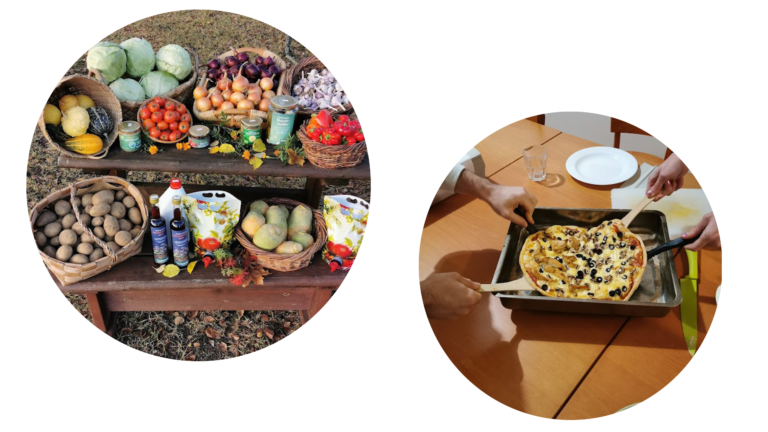
During your volunteering period, you will get to do different kinds of tasks outdoors and indoors. From spring to autumn, the tasks will concentrate on organic farming, from planting to harvesting. In addition, you will get to assist in making organic products, in social media tasks, and in maintenance work of the park area of Vanhamäki. You can also, according to your skills, help in planning and carrying out events, in office work and in kitchen work. You can also assist in organizing activities for unemployed people.

A collage of tho photos: on the left vegetables and root vegetables on bences outside, on the right hands reaching out to a pizza on a baking tray.

What is the European Solidarity Corps?

European Solidarity Corps is an EU-funded program that supports the international volunteering of young people. In the European Solidarity Corps, young people participate in projects which strengthen solidarity and social cohesion. Welcome to join in are all those 18–30-year old young people and organizations which want to work for a more solidary society.

For whom?

The position is meant for a young asylum seeker or a young person with a refugee or immigrant background who is living in Finland. Through the volunteering period, we wish to advance the integration of the young person to Finland and at the same time offer them international experience.

The position can fit you well if you are aged 18–30-years, and recognize yourself from these:

  • I am interested in organic farming and nature.
  • I enjoy practical tasks and teamwork.
  • I am ready to work outdoors during different seasons.
  • I can communicate in English in practical situations.

You don’t need to have any prior education or work background, and if you wish, you can receive support for learning Finnish during your volunteering period.

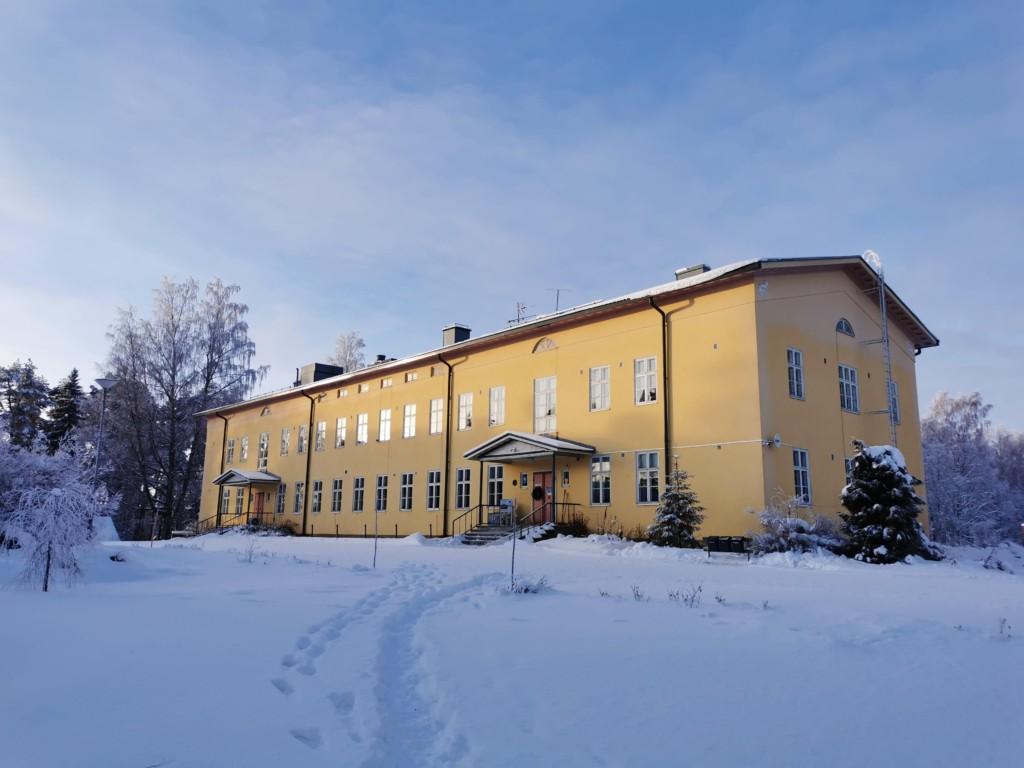
A building in a snowy scenary.

Accommodation and other practical arrangements

You will be accommodated in your own room in a building in Vanhamäki. You will have access to a shared kitchen and bathroom. Daily meals (breakfast, lunch, and dinner) will be partly offered in the restaurant of Vanhamäki, and partly you will cook meals out of ingredients offered by Vanhamäki.

You will be provided with travels to Vanhamäki, accommodation, and daily meals. In addition, you will get pocket money 5 euros in a day (150–155 € / month) as well as insurance for the duration of your volunteering period. Vanhamäki is located about three kilometers away from the center of Suonenjoki. If you wish, you can borrow a bicycle from Vanhamäki for your journeys to the center.

Accessibility

The volunteering tasks related to organic farming are mostly physical, and the buildings of Vanhamäki are not completely accessible, for example. If you are an applicant with a physical or sensory disability, please contact us prior to applying for consultation if the volunteering environment and tasks would be suitable for you and if the support needed could be arranged.

Vanhamäki’s website and social media channels

Website: vanhamaki.fi
The volunteers of Vanhamäki in Instagram
Vanhamäki in Instagram
The volunteers of Vanhamäki in Facebook
Vanhamäki in Facebook

Get to know also the experiences of Vanhamäki’s volunteers, on Maailmanvaihto’s website.

How to apply?

Download and fill in Maailmanvaihto’s application form for European Solidarity Corps volunteering (docx). Send your filled-in form to Maailmanvaihto: hosting@maailmanvaihto.fi. Apply as soon as possible, because the position will be filled as soon as a suitable candidate is found.

Please, notice: In the form, we ask for the name, quality label number, and OID number of your sending support organization. You can leave this question unanswered because in this case a sending support organization is not needed. Similarly, you can leave unanswered the question of who is your contact person in your sending support organization.

Further information

Would you like to ask something about the open position for European Solidarity Corps volunteering? Please, contact us – we will be happy to answer! You can reach us at hosting@maailmanvaihto, and +358 (0)44 318 0888.


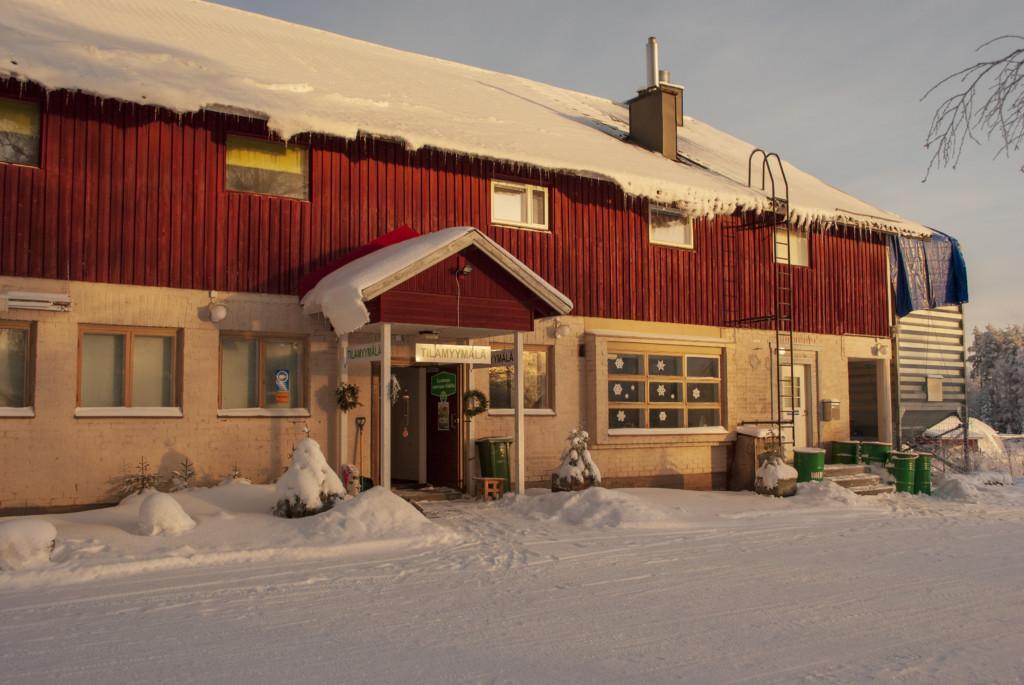
A building on a snowy day, on top of the front door it says in Finnish "a farm store".

Read also

Practice languages in Maailmanvaihto’s Language Café

Would you like to practice speaking in Spanish or Finnish...

For young people living in Finland: circular economy, second-hand shop, children’s aid… … apply now to volunteer in Iceland!

Hey, are you living in Finland, between 18 and 30...

For young people living in Finland: Workshops for young people, social media outreach… apply now to volunteer in Italy!

Hey, are you living in Finland, between 18 and 30...

Join Maailmanvaihto at the Helsinki Pride Parade and the Pride Picnic on June 27, 2026!

Dear friends, Helsinki Pride is here again! Let’s celebrate diversity,...

Dagtek Life Skills

Are you excited about connecting with people, organizing engaging activities, and contributing to a vibrant community? Would you like to support people with intellectual disabilities or autistic spectrum disorders in their daily activities? Welcome to volunteer at Dagtek Life Skills!

  • Number of open positions: 1
  • Volunteering period: 12.8.2025–11.8.2026
  • Last day to apply: 16 March 2025

DAGTEK offers services for people with intellectual disabilities or autistic spectrum disorders as a part of Western Uusimaa wellbeing services county. Dagtek organises activities in three different workshops which focus on arts & crafts, media work and independent life skills. The volunteer will assist mainly in the section of life skills activities. It is also possible to partly assist in Dagtek’s arts & crafts workshop and FIXtv (a small group working with film and media) if the volunteer has skills in these fields. The volunteer can also take initiative to arrange small workshops with different themes, for instance at this moment our volunteers are offering a weekly cooking class and Beauty Salon.

The participants of Dagtek’s life skills activities (Livsorienterad verksamhet in Swedish) need guidance and support in their daily activities. The life skills activities take place in small groups consisting of 2–4 people and are planned according to the condition, interests and needs of the participants. About twenty people take part in the life skills activities daily. The daily activities consist of music, arts and crafts, painting, games, and walks outside, for example. The goal is to encourage every participant to be active, get involved, make their own decisions, and affect the content of their daily lives, taking into consideration every participant’s individual starting point.

Location

Dagtek is located in Ekenäs (Tammisaari in Finnish), which is a small town with about 15 000 inhabitants situated by the sea in Southern Finland. Dagtek is located in the centre of the town. The majority language spoken in Ekenäs is Swedish (81 %) and about 17 % of the population speaks Finnish. Ekenäs is a part of the Raseborg commune (28 000 inhabitants).

Volunteer’s role and tasks

Through European Solidarity Corps volunteer cooperation, we wish to offer our community members the possibility to build networks and get a wider perspective on the world around us. At the same time, we hope to have one more person to be present for the clients and assist them in the daily workshop activities, as well as in social and practical situations during the day.

The volunteer’s role in the life skills activities is to support the clients and give guidance for them. The volunteer also helps in the clients’ daily activities related to mealtimes, going to the toilet and to walks outside, as well as walking the clients to and from their car transportation when they arrive and leave Dagtek. According to their skills and interests, the volunteer can also organize activities for small groups or individuals. Dagtek values creative activities such as music, arts & crafts, and physical and outdoor activities. The clients appreciate possibilities for individual encounters, for example, talks or reading for them. The volunteer can also contribute to the production of pedagogic and visual support materials and the documentation of Dagtek’s activities through photography, for example.

The volunteer will also write articles for Dagtek’s own Magazine (Dagtek Chronicles). The work with the magazine is done together with the clients and other staff members. The magazine is a very important task for the volunteers. A couple times a year the volunteers will also plan parties for the community. For example, a disco party or a summer party. This will be planned and arranged together with the staff members.

Volunteer’s profile

We are looking for a volunteer interested in working with adults (18–60-year-olds) with different types of intellectual disabilities, autistic disorders, or minor learning challenges. It is important that the volunteer is socially active, flexible, and motivated to participate in community life, meaning being there for the clients and communicating actively with them. It is also important that the volunteer has open communication with the staff team and shares their ideas and observations with them. The working language of Dagtek is Swedish, so it is important to be motivated to learn Swedish.

In the life skills activities team, the ability to motivate and encourage people and awaken their interest in participating and being active are of benefit. In the team, it is also good to have good social skills and to be open to meeting new people. We appreciate flexibility and a positive outlook on life and other people. It is also important to be able to tolerate fast-changing situations. Experiences or skills in alternative communication methods are an advantage.

Accommodation, food, and transportation

The volunteer will live in a shared flat together with other two volunteers of Dagtek. The volunteers have private bedrooms and share kitchen and bathroom facilities.

Lunch will be offered at Dagtek. Other meals will be cooked by the volunteer and the volunteer will get a food allowance.

Training during the volunteering period

The volunteer will have an on-arrival training camp and mid-term evaluation camp organised by the Finnish National Agency of the European Solidarity Corps.

The volunteer will get access to the Online Language Support (OLS) tool of the European Solidarity Corps to support learning Swedish.

Accessibility

The physical environment of Dagtek is also suitable for people with physical or (minor) sensory disabilities, depending on the special needs of the person. Wheelchair access is possible and there is an accessible toilet in the building. Since Dagtek works with people with different disabilities, our staff has experience in providing extra support and can sometimes support the volunteer, if needed. However, there are no resources to provide continuous intensive support for the volunteer. If you have a disability, please, feel welcome to contact us for consultation via the coordinating organization Maailmanvaihto: esc@maailmanvaihto.fi.

Themes

Creativity and culture, disabilities – special needs, inclusion – equality, health, and wellbeing

How to apply?

Further information

Volunteers’ experiences

Lisa – Dagtek

“Hi everyone:) I’m Lisa and I was a volunteer (2023) here at Dagtek. Here we work with people with intellectual disabilities and we mostly engage in art workshops and organise daily activities for them. I love this job because it gives me the possibility to improve myself and learn a lot everyday from my colleagues and from the clients of the centre. It’s a place where everybody is respected and treated equally. From the very beginning they made me feel important and valued and they encouraged me to be an active part of the workplace giving me also the opportunity to create my very own workshops. If you are thinking about joining the European Solidarity Corps and starting this adventure I can tell you that Dagtek would be a great opportunity for you :)”

Read also

Aitoo Vocational College

Would you like to learn through everyday encounters while supporting...

Nicehearts

Are you interested in organizing group activities and events? Would...

Tapola Camphill Village Community

Would you like to live and learn in a vibrant...

Developing skills with ICYE Kenya

In this series, we get to hear about volunteering opportunities within the ICYE network all over the world. This time, we chat with Mercie Kubasu who is the programme coordinator at ICYE Kenya.

Interview: Mia-Elina Aintila
Photo: Mercie Kubasu

Who are you?

I am Mercie Kubasu and I work in the ICYE Kenya office in Nairobi. I started in the office in 2016 with an educational background in International Business Administration. My roles include (but are not limited to) planning and coordinating the placements of both incoming and outgoing volunteers, facilitating training on intercultural learning, and coordinating the virtual volunteer programme.

What is the most rewarding and challenging aspect of your work?

My favourite aspect in my work is seeing young people value and benefit from volunteering. This is not a thing to take for granted in Kenya. Many people do not see the value in volunteering, as most people are more preoccupied by moving forward in life, seeking more clearly educational and professional opportunities. The most challenging part about being involved with International Volunteering Service (IVS) is seeing first-hand all the systemic structures that act as obstacles to the growth and empowerment of the African youth. Personally, I view the systemic obstacles as major contributors to why there is a lack of drive for volunteering among the African youth. Working with ICYE Kenya and participating in staff exchange within the ICYE network has opened up my eyes to the inequalities within the IVS space and how these inequalities continue to lock young people – especially from the global south – out of opportunities. In the long run, this contributes to the bigger issues of social injustices that young people face today.

What kinds of expectations do you have for your volunteers’ motivations?

I respect many kinds of motivations as people have different personalities as well. I especially appreciate a willingness to learn, seeing a person motivated because they are curious to learn about something they haven’t experienced before. I also appreciate skill-based motivation: wanting to improve a skill they already have or wanting to learn a new one.

What I do not expect from volunteers is for them to feel the weight of the world is on their shoulders. Sometimes I can see our volunteers carrying ‘white-guilt’ with them. It does more harm than good, both on an individual level and community level. A volunteer should take everything one day at a time.

“My favourite aspect in my work is seeing young people value and benefit from volunteering.”

I wish for the incoming volunteers to notice that the local people are doing well whether they are here or not. We want to avoid ‘voluntourism’: it’s good to want to travel – and you should take the opportunity to see Kenya while you are here – but volunteering should be the main focus. Our country’s tourist attractions are a bonus.

We are still in the middle of a global COVID-19 pandemic. How has your organization adapted to the situation? How do you view the future of international volunteering for your organization post-COVID-19?

The pandemic has definitely affected our operations. Since April 2020 we have been working from home, and as a consequence, we have lost out on walk-in opportunities: people looking for information on volunteering and/or going abroad, and people who could be our local project contacts. Also, there have been restrictions on Kenyans travelling abroad. Some candidates that were selected to participate in the exchange programme haven’t been able to go. The one-sided acceptance from the Kenyan government, letting foreigners in, and foreign governments not permitting Kenyans to travel highlights one of the inequalities within IVS.

We have adapted to the situation by offering online volunteering with projects that have access to the Internet. Volunteers can, for example, help in social media, research, writing proposals, providing administrative support (sending emails, drafting programmes and schedules, logistics). This arrangement has allowed for participants below 18-years-old and other participants who could not before travel physically for one reason or another to participate in IVS. This arrangement is currently in place with volunteers from United Planet (the local ICYE organization in the USA). Other effects have been that public transport is limited at the moment, so we have to use private means to transport our volunteers placed outside of Nairobi.

We hope to continue with the virtual volunteering programme even after the pandemic. Another challenge is to convince people that despite being in a pandemic the movement of volunteers is still necessary rather than reckless. We hope to continue with both on location volunteering and online volunteering opportunities.

What kind of projects does ICYE Kenya have?

We have lots of projects involving education: in high schools and primary schools, for example. Then there is work in children’s homes, generally taking care of the children, sometimes as young as nursery aged (0–2 year old). There are lots of project opportunities in hospitals, but these would typically require some professional skills. Other very valuable professional skills are competencies in education and social work, we have lots of projects that could benefit from these skill sets. We are also responding to young people’s wishes for environmental projects: we have projects combining environmental conservation and culture preservation where volunteers get to experience traditional ways of living from certain ethnic groups and learn about how the people in these communities conserve the environment.

Your current volunteers?

Currently, we have long-term volunteers from Ecuador, Finland and Denmark, and in addition some short-term volunteers from Denmark, Switzerland and the USA (online). This year we have sent out volunteers to Costa Rica and are hoping to send volunteers to Finland and Germany later this year.

Your greetings to those interested in volunteering in Kenya?

Karibu Kenya! Welcome to Kenya! Come and experience a new culture, something different compared to what you are used to. Whether it is for your own personal development or career development, you get to help local communities while developing your skills.

#ICYEKenya #ExperienceTheWorld

This article has been extracted from Maailmanvaihto’s magazine Volunteers’ Voices 2/2021 edition with the theme of motivation to volunteer abroad. You can find the full magazine and previous releases here.
Read also

Toward more #EquitableVolunteering – ICYE sets up a new scholarship fund

The international ICYE network aims at leveling the global playfield by setting up a new scholarship fund – the South-to-South Scholarship Fund – for volunteer exchanges between countries of the Global South.

Each year ICYE Finland sends up to 40 volunteers out into the world, most of them young adults between the ages of 18 and 30. Similarly, the organisation receives annually around 30–40 young volunteers from various parts of the world. Many of these volunteer exchanges take place through the international ICYE network.

In 2021, the federation of International Cultural Youth Exchange (ICYE) consists of 39 member organisations (sometimes called ‘national committees’), all representing ICYE in their respective countries. The ICYE network seeks to promote intercultural understanding, equal opportunities, tolerance and peace by providing young adults participating in the program with challenging learning experiences in a foreign country. Another important goal is to promote the personal growth of the participants of the program by providing the opportunity to participate in international volunteering programs.

On an annual basis, up to 700 people carry out their international volunteer exchanges within the ICYE network. Most of these volunteer exchanges take place between the countries of the Global North and the Global South. Participation costs are typically offset between national organisations using program fees paid by participants: each national organisation receiving a certain amount of compensation for hosting a foreign volunteer. Sometimes local activities are funded also through project funding, such as cooperation with the European Solidarity Corps.

“The South-to-South Scholarship Fund was founded to bridge the economic gap that exists between young people in the countries of the Global South and the Global North.”

Within the federation, the relative lack of volunteer exchanges within the Global South was first taken note of in the early 2010s. In fact, between 2015 and 2018, less than one percent of a total of 2778 volunteer exchanges took place between two countries of the Global South. A deeper examination revealed the main reasons for this disparity to be structural: the federation found that there are no financially supported programs in the Global South within the ICYE network (while, for example, in 2015, 91 percent of German volunteers enrolled through a state-sponsored volunteer program); in addition, travel and visa costs are often relatively more expensive for participants coming from the Global South, and their flight routes often compile into imposingly massive collections of connection flights.

The federation organised workshops around this theme of disparity to find out where the federation could best intervene. One result of these workshops was publicised in the summer of 2021, when ICYE announced the launch of a global scholarship fund for young people in the South called the “ICYE South-to-South Scholarship Fund”. We asked two members of the South-to-South Scholarship Fund working group to tell us more about ICYE as a federation, and the newly announced fund, and its background.

Courtney Kelner works at the ICYE International Office in Berlin representing the perspective of the International Office. Mercie Kubasu represents ICYE Kenya’s office and brings us some perspective from the Global South. Both have played an important role in promoting the development of the fund.

First off, who are you? Please tell us something about your work in the ICYE network.

Courtney: I started working at the international ICYE office in Berlin in early 2021. I have previously worked in the volunteer sector in the field of environmental protection. My volunteer history began 15 years ago in Kyrgyzstan with the U.S. Peace Corps where I met lovely people in the activist field. And the South-to-South fund has definitely been the favorite theme in my current work! The COVID-19 period has affected the beginning of my time in the office in a challenging way, namely with the lack of face-to-face encounters with the people with whom I work, but luckily the internet connects me well to both my local and international colleagues.

Mercie: I have been working for the ICYE Kenya office in Nairobi since 2016. I come from a background of studying international business administration, and during the last five years I have learned a lot about the world of international volunteering. A three-month office exchange with the German ICYE office (ICJA) gave me a bit of experience similar to what our volunteers go through and increased my understanding of the structural challenges related to the international volunteering network, and I enjoy putting to use this enhanced understanding in my work with IVS (international volunteer service).

How does the international ICYE network function? What kind of decision-making and executive structures does the federation have?

Courtney: ICYE consists of a federal structure where its members, i.e. national organisations, are independent actors. Simultaneously, however, each organisation is dependent on its partners. Such a structure requires partners to trust each other. Shared values, jointly developed agreements and policies help build and maintain trust between organizations. We have a lot of faith in the solidarity within the network. The biennial General Assembly, with representatives from each national organisation, decides the broad lines and direction of action of the network. The ICYE Board, composed of representatives of national organisations, is responsible for implementing the decisions of the General Assembly. The Board is elected for two years at a time and meets twice a year. The ICYE International Office in Berlin is responsible for developing the volunteering program and cooperation networks on the practical level. For success in cooperation, it is crucial that the actors themselves are involved in creating the rules so that they themselves believe in the common principles. ICYE’s decision-making system is therefore very horizontal. It has its advantages, but the downside may be a sluggishness of decision-making. For different working groups, such as those set up around this fund, the pace of assembly can be much faster, as required.

Mercie: I like to compare the role of the international office to a backbone. National organisations act like the limbs of the body and the international office ensures the functioning of the limbs. It is true that the governing style of the ICYE network takes its own time, but I appreciate its democratic nature. It is also important that the representatives of the member organisations themselves choose to be involved in the development of the federation, and ICYE provides a good foundation for this. However, each individual brings their own views into the mix on how to develop policies. I find that working in a multicultural network also teaches a certain kind of cultural humility, which is a valuable skill in international cooperation.

How did the South-to-South Scholarship Fund get started?

Courtney: The ICYE network has been keeping its eye on the relative sparseness of volunteer exchanges between countries in the Global South. In effect, there is a huge gap between the number of North-to-South exchanges and South-to-South exchanges. Many of the root causes of the problem are structural, starting with challenging flight routes and expensive travel costs, but much could also be done to change attitudes. Today, there is a growing awareness and interest in various aspects of social justice, and ICYE wants to play its part in the development. We found that one of the most substantial things we can influence is our own support systems. Consequently, the South-to-South Scholarship Fund was founded to bridge the economic gap that exists between young people in the countries of the Global South and the Global North. We also certainly have a part in replaying neo-colonial structures – despite better intentions – and the federation is trying to do what it can to ensure that we do not strengthen these structures further in the future.

Mercie: Indeed, through my own work I have noticed how much work there is to be done especially in changing the attitudes of local youth towards volunteering, other than South-to-North. Funded voluntary exchanges between countries of the Global South would make it more attractive for young people to visit other countries in the Global South. Often, when heading from South to North, people seek other opportunities in life in addition to gaining volunteering experience. As the Global South as a destination for volunteering increases in attractiveness, cultural exchange and experiences will hopefully also diversify. I hope that as a result countries of the Global South will find more young people, richer from their volunteer experience, willing to return to their respective home countries, thus slowing down the infamous ‘brain drain’ effect.

What hopes do you have for the impact of the South-to-South Scholarship Fund?

Mercie: One of my hopes is that the local offices of the Global South of the ICYE network would no longer be so heavily dependent on volunteers from the Global North and the program fees they pay. International volunteering is a great opportunity to gather professionally useful skills, and often there is a lot of personal growth taking place along the way as well. I hope that with the help of this new fund, we will bring in more young people into volunteering through the ICYE network, and that ICYE will gain more recognition as a globally influential organization within the field of international volunteering.

Courtney: I hope that in the future we will have an increasingly diverse set of participants, and there no longer would be the need to come from a well-off family to gain international volunteering experience. At a more general level, it would also be great to see local ICYE offices receive funding tied to increasingly local contexts and be less dependent on European funding.

Screenshots: In August, ICYE organized for ICYE organizations an online info event on the lauch of the fund.

Text and screenshots: Mia-Elina Aintila

The text is a translation of the Finnish article “Uudella stipendirahastolla kohti tasa-arvoisempaa vapaaehtoistyökenttää” which has been published in the magazine MaailmanVaihtoa – Volunteers’ Voices 2/2021.

How can you donate to the South-to-South fund?

Read also

Practice languages in Maailmanvaihto’s Language Café

Would you like to practice speaking in Spanish or Finnish...

For young people living in Finland: circular economy, second-hand shop, children’s aid… … apply now to volunteer in Iceland!

Hey, are you living in Finland, between 18 and 30...

For young people living in Finland: Workshops for young people, social media outreach… apply now to volunteer in Italy!

Hey, are you living in Finland, between 18 and 30...

Join Maailmanvaihto at the Helsinki Pride Parade and the Pride Picnic on June 27, 2026!

Dear friends, Helsinki Pride is here again! Let’s celebrate diversity,...

Greetings from abroad: from Finland to Switzerland, from Germany to Finland

Each year Maailmanvaihto sends and receives young people for long-term volunteering. Minja von Holten and Paula Eschenburg share their experiences of volunteering with the European Solidarity Corps.

Interviews: Fabienne Zogg & Emma Niemi

Paula: from Germany to Finland


After I finished high school in Germany, I did not know what I wanted to do in the future. I was craving experiences and needed time to think about my goals and career aspirations. Knowing that a volunteer year abroad can really shape you and help you to grow, I chose a project in Israel. Since travelling to Israel was nearly impossible at the time due to the pandemic, I decided to go to a European country instead. I chose Finland for its amazing nature and landscapes, but also because I love Northern European countries and because I happened to find a great project. Coming to Finland definitely turned out to be the right decision.

A variety of tasks at a folk high school

My voluntary workplace is called Lehtimäen opisto and it is located in Lehtimäki, a small village near Seinäjoki. It is a folk high school for people with disabilities, which, in addition to education, also offers occupational therapy as well as riding therapy to the students. I had a whole variety of different tasks. On Mondays, I worked in the school kitchen, and on Thursdays, I assisted with the riding therapy and helped to clean the school stables. The other days of the week, I was able to work with the students in their classes. For example, I helped in the math, music, art, and handicrafts classes.

An inspirational experience

In my project, I work with people with disabilities. I expected the work to be very difficult and full of sorrow. Instead, I found the work to be inspirational, and I was able to build great connections with the students. Obviously, there were a few difficult situations but overall, being a part of the students’ daily life was truly a joyous and exciting experience.

It was really surprising how the time flew by. It feels like yesterday when I stepped out of the plane all excited and nervous. Also, I got to know so many amazing and inspiring people and grew a lot over the past ten months.

Meaningful connections in rural Finland

I would say that the most rewarding experience was the work with my students. We learned a lot from each other, and I am really grateful that I got to work with them. The most challenging thing for me was living in a very small village. Having lived in Berlin, a big city, for my whole life, it was difficult to adapt to the life in Lehtimäki, where there is only one bus a day.

Greetings to those considering volunteering abroad

Going abroad for a year is a big decision, and at the end of the day, no one can make the decision for you. But I would always recommend it since it is an amazing opportunity to grow and get to know yourself.

Minja: From Finlnd to Switzerland

Minja von Holten tells about their volunteering period in Swizerland on our website in Finnish. >> Read the interview of Minja


The article has been published in the nagazine MaailmanVaihtoa – Volunteers’ Voices 2/2021.

Read also

Volunteering at a special folk high school in Finland

What's up with the volunteers of Maailmanvaihto? Two of them...

Ten Months at Koli National Park and Nature Centre Ukko

Jump into the volunteering European Solidarity Corps Volunteering experience of...

From Spring to the Autumn at Vanhamäki

A French, a Portuguese (Madeiran, to be precise) and a...

Privacy Policy: Documents of Incoming Volunteers

Privacy policy
Grounds: Personal data act 523/1999 *)
Data protection setting of EU
Date: 12th November, 2022

1 Registration holder / Business ID

Name: Maailmanvaihto / Business ID: 0281262-7
Address: Oikokatu3, 00170 Helsinki, Finland
Other contact information: telephone: +358 (0)44 318 0888
E-mail: hosting@maailmanvaihto.fi

2 Contact person on regarding the register

Name: Programme Coordinator Mari Takalo
Address: The address of Maailmanvaihto (see above)
Other contact information: Telephone: +358 44 318 0888
E-mail: hosting@maailmanvaihto.fi

3 The name of the registration: Documents of Incoming Volunteers

4 The purpose of processing the data of the register

  • Arranging voluntary workplaces and accommodation for the volunteers.
  • Arranging matters related to the volunteers’ residence permit.
  • An excerpt of a criminal record is requested from all the volunteers who work among minors and people in a vulnerable position.
  • Paying the allowance for European Solidarity Corps volunteers.
  • Maailmanvaihto composes a list of all the contact persons of the volunteers in a case of emergency so that the Maailmanvaihto duty officer can be in contact with them, if necessary.

5 The information content of the register

  • Application form and motivation letter in English, consisting of the following personal data: the name of the registered applicant, contact details, contact details of an emergency contact person, background information as requested in the application form, and application profile data written by the applicant.
  • ICYE and IJFD volunteers: Certificate of Health form.
  • ICYE and IJFD volunteers: Report on the Candidate by the sending organization, which includes the interviewers’ comments on the applicant’s suitability to the program.
  • European Solidarity Corps volunteers: income-tax cards.
  • Criminal record excerpt of the volunteers who will work with minors or people in a vulnerable position.
  • Copy of passport of those volunteers who will need a residence permit.
  • A list of the contact details of the contact persons in case of an emergency, given by the participants.
  • A form reporting the volunteer’s interest in communication co-operation with Maailmanvaihto.

6 Regular sources of information

The information is received either directly from the applicant/participant or from the applicant/participant’s sending organization, which has received the information from the applicant/participant.

7 Processing data at Maailmanvaihto

  • The information of the register is handled carefully at Maailmanvaihto.
  • Access rights to the information of the register are restricted inside Maailmanvaihto so that only the office staff of Maailmanvaihto can handle the data of the register. The information will be accessible for and used by only those staff members who need it in their work tasks.

8 Regular disposal of information

  • The Application form, Certificate of Health (ICYE and IJFD volunteers)and Report on the Candidate (ICYE and IJFD volunteers) are given to the potential volunteer workplace and host family of the registered participant.
  • A criminal record excerpt is given to the potential volunteer workplace.
  • Income-tax cards of the European Solidarity Corps volunteers are handed to the accountant.

9 Transferring information outside EU or ETA

  • Maailmanvaihto may store some of the data of the register in its accounts in the clouds of Google and Dropbox, in which the information may be situated outside the EU/ETA district.

10 Protection principles and time of preservation of the register

A. Manual data

  • The documents in Maailmanvaihto’s possession are kept in a locked archive at the office of Maailmanvaihto.
  • A list of the program participants’ contact person information is kept in Maailmanvaihto emergency duty file, which is in the hands of the duty officer.
  • Time of keeping of information of applicants not selected for a volunteering programme is a maximum of one year.
  • Time of keeping the documents of the participants of the volunteering programmes:
    • The time of preservation of the application forms is not restricted.
    • Certificate of Health is preserved for two years after the volunteering period has ended.
    • The criminal record excerpt is preserved for two years after the volunteering period has ended.
    • Report on the Candidate is preserved for two years after the volunteering period has ended.
    • The time of preservation of the form reporting the volunteer’s interest in communication operation with Maailmanvaihto is not restricted.
    • Other documents concerning the registered person are preserved for two years after the volunteering period has ended at most.
    • A list of the participants’ contact persons’ contact details in case of emergency is preserved for two years after the volunteering period has ended.
    • Income-tax cards are preserved at Maailmanvaihto for six years.

B. Information processed with IT

  • Electronic documents are kept either in the Google G Suite and Dropbox accounts or computer’s hard drive of Maailmanvaihto office staff. The accounts and computers are secured with passwords and the computers with security software.
  • Time of keeping of information of applicants not selected for a volunteering programme is a maximum of one year.
    Time of preservation of applicants selected for a volunteering programme:
  • The time of preservation of the application forms is not restricted.
    • Certificate of Health is preserved for two years after the volunteering period has ended.
    • The criminal record excerpt is preserved for two years after the volunteering period has ended.
    • Report on the Candidate is preserved for two years after the volunteering period has ended.
    • The time of preservation of the form reporting the volunteer’s interest in communication operation with Maailmanvaihto is not restricted.
    • Other documents concerning the registered person are preserved for two years after the volunteering period has ended at most.
    • The list of the participants’ contact persons’ contact details in case of emergency is preserved for two years after the volunteering period has ended.
    • Income-tax cards are preserved at Maailmanvaihto for six years.

11 Checking rights

A registered person has the right to check the information recorded about them in the person register. The request must be appointed to the Programme Coordinator of Maailmanvaihto either personally or through the office address. Personal data act §24, the data protection setting of the EU.

12 Right to demand a correction of information

If there is an error in the person register, the registered person has the right to demand a correction. The request to correct false information must be appointed to the Programme Coordinator of Maailmanvaihto.

13 Other rights concerning the processing of personal data

The registered person has the right to ask that their information will be removed. The controller of the register will correct, remove or complete incorrect, unnecessary, insufficient personal data by their own initiative or by the demand of the registered person. The registered person is responsible for the correctness of the information they give. It is the responsibility of the person whose information is in the register to notify if there are changes to the information they have given.

14 Changes to the privacy policy practices

This privacy policy may be updated, for example, if the legislation changes.

Read also

Practice languages in Maailmanvaihto’s Language Café

Would you like to practice speaking in Spanish or Finnish...

For young people living in Finland: circular economy, second-hand shop, children’s aid… … apply now to volunteer in Iceland!

Hey, are you living in Finland, between 18 and 30...

For young people living in Finland: Workshops for young people, social media outreach… apply now to volunteer in Italy!

Hey, are you living in Finland, between 18 and 30...

Join Maailmanvaihto at the Helsinki Pride Parade and the Pride Picnic on June 27, 2026!

Dear friends, Helsinki Pride is here again! Let’s celebrate diversity,...

Online Info Event on International Volunteering 31st August 2021

  • 31st August 2021 at 6–7.30 p.m.
  • in Zoom (link to the sign up form up below)

Interested in volunteering in Europe or further away? You are welcome to the online info event of Kansainvälisen Vapaaehtoistyön Verkosto KaVa (the Network of International Volunteering)! During the event, you will gain information on the possibilities to head abroad via the network’s members, when the coronavirus situation allows, and hear about the experiences of volunteers.

The members of the network are Allianssi Youth Exchanges, Kansainvälinen vapaaehtoistyö ry (KVT), and Maailmanvaihto – ICYE Finland. The Network of International Volunteering advances quality and responsible volunteering.

  • The members of the network send volunteers abroad to local grass-root level projects and receive volunteers to Finland.
  • The volunteering periods last from a few weeks up to a year.
  • An aim and a purpose have been thought for the volunteering, and the activities of the members of the network are non-for-profit.
  • The goal of volunteering is intercultural learning as well as advancing global responsibility and active citizenship.
  • In Finland, one can join in gaining international experiences in the voluntary activities of the network.

The event is open for all. The event will be held, at least mainly, in Finnish. The participants commit to building for their part an atmosphere in which all are respected. Sign up for the event via the sign-up form of Zoom.

After signing up, you will automatically receive a link to the Zoom meeting. The accessibility information of Zoom is available at https://zoom.us/accessibility. In case you have questions, please contact us at tiedottaja@maailmanvaihto.fi.

Welcome!

During the week of the info event 30.8.–5.9.2021, greetings from the people of KaVa and the pickups of the activities of the network will be visible on social media. Welcome to follow our accounts! #KaVaDays

Read also

Practice languages in Maailmanvaihto’s Language Café

Would you like to practice speaking in Spanish or Finnish...

For young people living in Finland: circular economy, second-hand shop, children’s aid… … apply now to volunteer in Iceland!

Hey, are you living in Finland, between 18 and 30...

For young people living in Finland: Workshops for young people, social media outreach… apply now to volunteer in Italy!

Hey, are you living in Finland, between 18 and 30...

Join Maailmanvaihto at the Helsinki Pride Parade and the Pride Picnic on June 27, 2026!

Dear friends, Helsinki Pride is here again! Let’s celebrate diversity,...

Volunteers’s Voices 2/2021: What drives people to volunteer abroad?


Read the magazine as pdf version.

In this issue

4 Pääkirjoitus / Editorial
6 Kutsu syyskokoukseen / Invitation to Autumn Meeting
7 Kuulumisten vaihtoa
10 Tule mukaan toimintaan
11 Hallitustyössä oppii monenlaista
12 Join Our Activities
13 Terveisiä maailmalta! Greetings from Abroad!
17 Developing skills with ICYE Kenya
35 Tapahtumakalenteri

Theme

20 Volunteering at the Maailmanvaihto Office
22 Välivuosi vapaaehtoisena
26 Erilaisten kulttuurien ymmärrystä ja ammatillista osaamista
28 Lehtimäen opistossa vapaaehtoisia tuetaan kertoen ja kysellen
31 Uudella stipendirahastolla tasa-arvoisempaa vapaaehtoistyökenttää

Editorial: Why leave the comfort zone?

Interest in different people and new cultures, taking a gap year, learning new skills, broadening one’s worldview, learning a language, experiencing a sense of community, doing hands-on work, clarifying future plans – these things, among others, are emphasized when the people participating in international volunteering through Maailmanvaihto discuss their motivation to volunteer abroad.
There are certainly as many reasons to leave the domestic comfort zone and slip into a daily life in another country as there are volunteers, but those who go on international volunteering seem to agree that a period of volunteering abroad is a growing experience that you may, in one way or another, carry with you for the rest of you life. Living the everyday life in a different cultural environment far from home widens the world around us while also significantly affecting our inner world and ability to reflect on our own as well as others’ actions. For many, what they learn and experience during international volunteering becomes part of their identity, which is why the volunteering period is often seen as a significant event in their own life story.

In this issue, several people who have gone abroad or arrived in Finland for volunteering through Maailmanvaihto shed light on their own motivation to participate in international volunteering. You can, for example, read about Roos’ European Solidarity Corps volunteering period at the office of Maailmanvaihto or find out what Anu’s experience of ICYE volunteering for a social organization in Bolivia means to her now, seven years later. There are also various other ways of getting involved in Maailmanvaihto’ activities in Finland – some of our former volunteers, for example, make school visits to secondary schools, act as support persons for foreign volunteers, interview applicants for international volunteering and participate in the board’s activities. In this magazine, Venla, a board member responsible for support for foreign volunteers, discusses her motivation to join the board.

There are many motivations to change your world, so read more and come along!

Wishing you inspiration and enjoyable reading moments,

Elina Villberg
Board member, Team of outgoing volunteers


Read also

Practice languages in Maailmanvaihto’s Language Café

Would you like to practice speaking in Spanish or Finnish...

For young people living in Finland: circular economy, second-hand shop, children’s aid… … apply now to volunteer in Iceland!

Hey, are you living in Finland, between 18 and 30...

For young people living in Finland: Workshops for young people, social media outreach… apply now to volunteer in Italy!

Hey, are you living in Finland, between 18 and 30...

Join Maailmanvaihto at the Helsinki Pride Parade and the Pride Picnic on June 27, 2026!

Dear friends, Helsinki Pride is here again! Let’s celebrate diversity,...