ESC volunteering at Maailmanvaihto: a joint learning experience

This year, for the first time, a European Solidarity Corps volunteer joined the office team of Maailmanvaihto. The period was rewarding both for the volunteer Isa Hernandez and for the office team members, even though the corona time changed their joint plans.

Maailmanvaihto – ICYE Finland has been active in the field of international youth exchange in Finland since 1958, but normally our volunteers work elsewhere than at Maailmanvaihto’s office. This changed at the beginning of 2020, when Maailmanvaihto welcomed into its office team a young person for European Solidarity Corps Volunteering. The first volunteer of Maailmanvaihto’s office was Isa Hernandez who has a Costa Rican background. Isa previously traveled to Finland for ICYE volunteering and studied here after her volunteering year in the arts and media field.

The aim of hosting ESC volunteers at the Maailmanvaihto office is to offer the participants an opportunity for intercultural learning, while at the same time learning about the activities of a youth exchange organisation and media and communication work. The European Solidarity Corps volunteers enrich the organisational culture by bringing their knowledge, ideas, and perspectives of a young person.

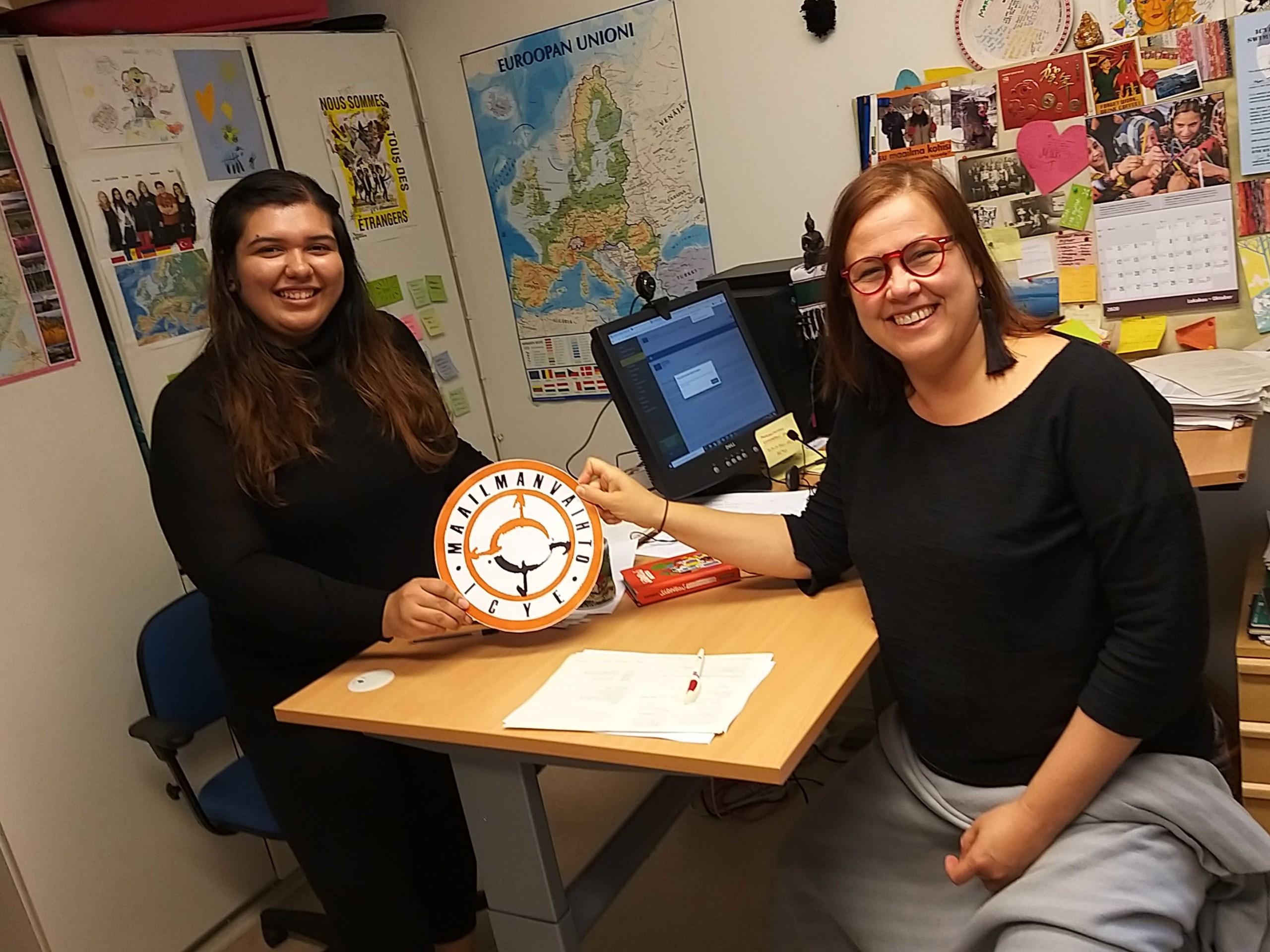
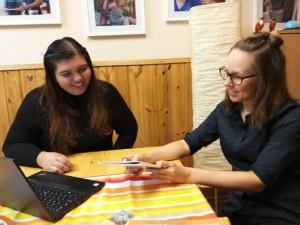
ESC volunteer Isa Hernandez and communications officer Minna Räisänen at a table at the office of Maailmanvaihto.
ESC volunteer Isa and communications officer Minna at the office of Maailmanvaihto. In the photo above Isa and programme coordinator Mari.

In September, the volunteering period of the first ESC volunteer at the office came to an end. For Isa, being an ESC volunteer at Maailmanvaihto was a fulfilling job: “I got to use a lot of my skills and learned new ones. I liked how dynamic the work was. The load of work varied depending on the season. I recommend volunteering at Maailmanvaihto’s office to people who want to learn about the world of volunteering and primarily the NGO position.” During her volunteering period, Isa introduced the Maailmanvaihto Language Café: “It was very rewarding to create a space in which the members of the community could learn from each other.”

The co-operation plans which were made at the beginning of the year changed due to the coronavirus situation. For instance, the video shooting trips of Isa were canceled and the Langage Café went online soon after the first meetings. Despite the changes, the co-operation ended up very inspiring for Maailmanvaihto. “Isa’s input for Maailmanvaihto’s communication work was important from hosting first live broadcasts on Instagram and renewing the look of our advertisements on host family activities. She was also of great help for the office staff in learning online skills during a time in which more of Maailmanvaihto’s activities were taken online”, tells communications officer Minna Räisänen.

Maailmanvaihto has coordinated ESC volunteering in workplaces for years and we welcome new actors to join this joint learning experience, too. “Our own co-operation with Isa strengthened our view that an ESC co-operation offers valuable learning and new perspectives, both for the volunteer and for the voluntary workplace”, says programme coordinator Mari Takalo. Through Maailmanvaihto, voluntary workplaces can receive young adults for ESC volunteering for 6–12 months. Interested work communities can find further information on our website.

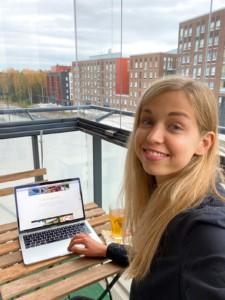
ESC volunteer Roos Freije in front of a table and a laptop at a balcony.
ESC volunteer Roos Freije worked from her quarantine-flat for the first two weeks.

Maaimanvaihto wants to thank Isa for her valuable support and we wish her all the best in the future and especially with the university master she just started. At the same time, the organisation welcomes a new ESC volunteer: Roos Freije, who traveled to Finland from the Netherlands. Also Roos will support the office team and she looks forward to work at Maailmanvaihto for the upcoming five months: “I am eager to help fulfill the aims of Maailmanvaihto, to learn more about working in a Finnish NGO and to make sure that both the current and future volunteers will have a life-changing experience, which they will cherish forever.”

Read also:
Young person, apply for ESC volunteering in Finland
Become a voluntary workplace for a young person from abroad

Read also

Keeping in touch after volunteering

The end of the international volunteering period often marks a...

Sharing and Caring as a Host Family

All the volunteers who have lived with us have arrived...

Ten Months at Koli National Park and Nature Centre Ukko

Jump into the volunteering European Solidarity Corps Volunteering experience of...

Guidelines for safer spaces within the activities of Maailmanvaihto – ICYE Finland

Maailmanvaihto – ICYE Finland is a youth exchange organization that provides young people intercultural learning experiences via international volunteering. The organisation’s aim is to increase intercultural understanding, promote the equality of opportunity, equality and peace. Maailmanvaihto actively works toward providing safe and equal environments for everyone participating in its activities.

The purpose of the guidelines for safer spaces is to create an atmosphere where everyone feels welcome as their own selves. Our goal is that everyone taking part in Maailmanvaihto – ICYE Finland’s activities participates also in creating safer and more inclusive spaces.

People from all around the world with different kinds of backgrounds meet in the activities of Maailmanvaihto. Within the scope of the organization’s activities, nobody is to be discriminated against based on factors such as gender, sexual orientation, ethnicity, beliefs, range of abilities, or the like.

The following principles foster safer and more inclusive spaces:

1. Treat every individual equally and with respect. Don’t discriminate or exclude anyone.

2. Let people define their own identity (e.g. gender, (dis)ability, nationality). Instead of assuming, ask and respect the answer.

3. Recognise your role and privileges in the group and act responsibly.

4. Everyone has their own habits related to personal space and touching. Be sensitive and respect everyone’s boundaries.

5. Don’t harass or offend anyone – verbally or physically. If you hurt someone (even unintentionally), apologize.

6. Give everyone space to speak and express themselves. Listen to others actively and encourage everyone to participate.

7. Everyone has different language skills and ways of communication. Try to express yourself so that everyone could understand.

8. Different opinions can and should be discussed. Be constructive and polite, even when you disagree.

9. Let’s take care of each other. If you are worried about someone’s well-being, offer your support.

10. If you experience or witness harassment or discrimination, report to someone (e.g. organiser or harassment contact person). Don’t stay alone.

Maailmanvaihto – ICYE Finland deals with all cases of harassment and discrimination according to the organization’s equality and non-discrimination plan. The organization warmly welcomes feedback on how its guidelines for safer spaces work in practice. We are especially interested in feedback on which practices have proven to be effective and whether any possible problematic situations have been dealt with appropriately. You can send your feedback via email to: maailmanvaihto@maailmanvaihto.fi.

Read also

Practice languages in Maailmanvaihto’s Language Café

Would you like to practice speaking in Spanish or Finnish...

For young people in Finland: 11-month volunteering in Germany – education, youth work, cultural exchange & personal development at Urspring School!

Are you 18–30 and looking for a meaningful international experience...

For young people living in Finland: European projects, public relations, social media & political education workshops… apply now to volunteer in Germany!

Are you 18–30 and looking for a meaningful international experience...

For young people living in Finland: circular economy, second-hand shop, children’s aid… … apply now to volunteer in Iceland!

Hey, are you living in Finland, between 18 and 30...

Towards Meaningful Meetings in Volunteering

In international volunteering the participants learn through daily co-operation. At Maailmanvaihto’s camps the volunteers prepare themselves for it.

It could be an upper secondary school graduate from Oulu, Finland, travelling to assist in a home for the elderly in Nairobi, Kenya. Or a nurse from Tokyo, Japan, making a journey to Finland to volunteer in a kindergarten in Tuusula. International volunteering takes every participant into a new community and society to learn in daily interaction.

”In my volunteering period a few years ago, I coordinated activities at a time bank of services in San José, Costa Rica. In those tasks it truly strike me that one can learn something from each person. That every person you meet always knows more than you about something”, says Silja Lehtonen. In a time bank services are exchanged: by teaching someone to play the guitar one can in return get teaching of Italian, for instance.
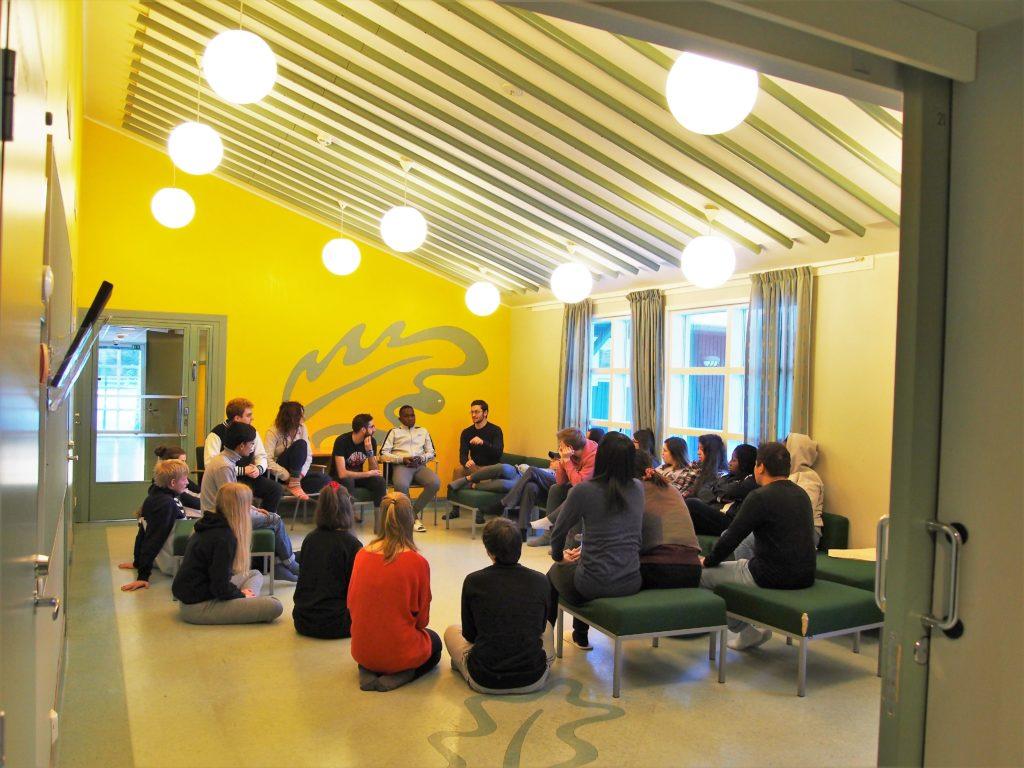
Indeed, there is something to learn from someone, and Maailmanvaihto wishes that its volunteering periods of 6–12 months offer for all parties involved learning and widening of perspectives through a respectful, dialogical and inclusive interaction.

Exploring interaction

We enter into interaction with all that we are: our knowledge, expectations and prejudices, for instance. And all that we bring into the interaction affects the way it proceeds. At training camps of Maailmanvaihto the volunteers get to explore their own and others’ starting points as well as the societal phenomena surrounding them.
The participants who head from Finland for ICYE volunteering abroad get together before their departure and after their return. Volunteers who come from abroad to volunteer in Finland meet in the beginning and middle as well as at the end of their volunteering year (only ICYE volunteers).

”Maailmanvaihto and the other ICYE organizations around the world have a mix of people from different countries joining in their activities. This makes them a great platform for discussing about societal matters: getting at once perspectives from individuals from many different societies can widen understanding on the matters”, says Isaura Hernández-Navarro, one of the camp instructors.

“When it comes to issues of inclusion and anti-racism, I feel Maailmanvaihto also bears the responsibility to address them with the international volunteers in the sense that while the volunteers experience in Finland a new place and way of life with fresh eyes, they may be vulnerable to experience discrimination or racism”, she continues.

The latest camp, held in January 2019, was the mid-term meeting of volunteers in Finland. In it the participants explored how different beliefs change over time and how we can advance dialogue between people with different beliefs, for instance. They also reflected upon and discussed about occasions in which they have witnessed discrimination or discriminated someone.

Try to see every point of view. Meet different kinds of people. Ask before you judge. Do not look away but stand up for people who are discriminated. Ask yourself if you unintentionally perform racism. These are examples on the things the volunteers came up with at the camp when they pondered upon which kinds of daily actions they themselves could take against racism while volunteering.

Take a step forward

Let’s zoom into one of the camp activities. At their first camp last August, this season’s volunteers in Finland explored the inequality among people through the exercise “Take a step forward”. It has been published in 2002, as an exercise learned from Els van Mourik and others, in Compass which is a manual on human rights education by the Council of Europe. Along the years it has been published as varying versions in many other contexts, too. Also Maailmanvaihto has adapted the exercise to suit its training camps.

In the exercise, the participants are first each given a role card. Afterwards they go to stand in a line and different statements, such as “You feel yourself safe in the place in which you live”, are read aloud. Those who feel the statement is in line with the life of their role card person, take a step forward. At the end, the participants discuss about their ending positions and about how it was to imagine the life of the role card person.
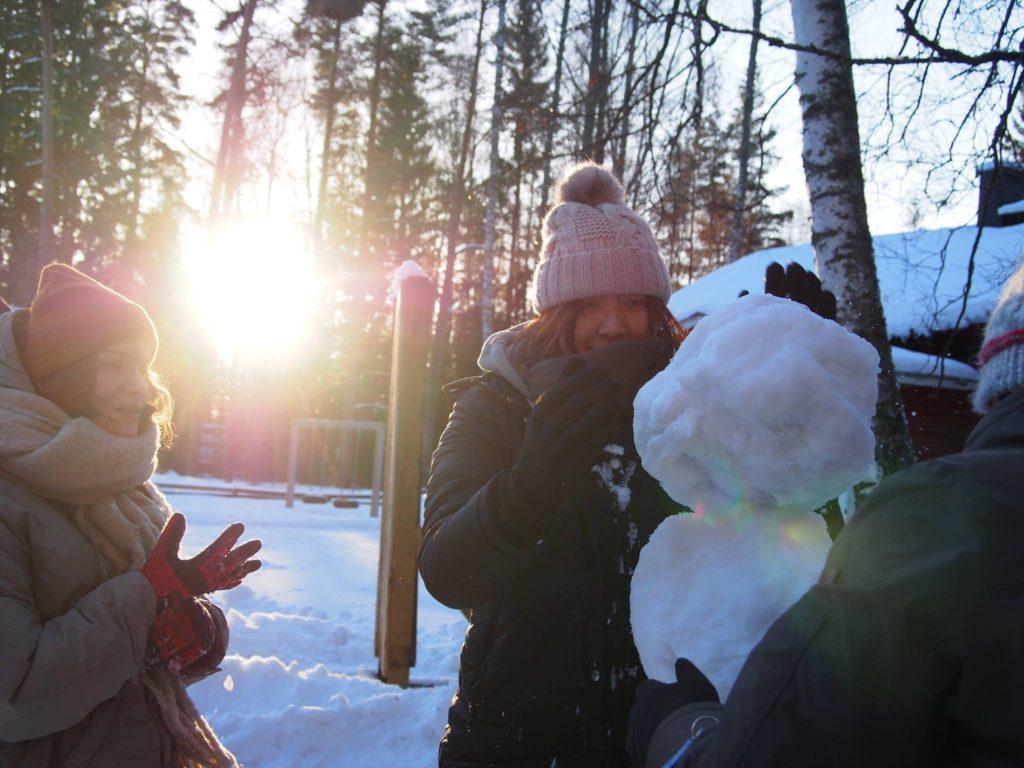
“It can be difficult to empathize with someone else’s life as well as to notice inequalities among people. This is something that the exercise makes the participants pay attention to”, says Alma Smolander, one of Maailmanvaihto’s participants of the strategic partnership project Standing Together Against Racism in Europe (STAR E) of the ICYE network. Within the project, Maailmanvaihto develops further its activities on advancing inclusion and combating racism.

“The exercise raises a discussion about why it is difficult to empathize with the life of others, especially related to minorities. Why do not we have more information? Where does our information come from and is it reliable? It also brings into focus stereotypes: what if someone can easily imagine many things about a person’s life with just a little information from the role card?”

“Another thing that the exercise highlights is that many factors affect the position of a person and that a same factor can affect individuals differently. For instance, living as a woman can be different depending on one’s sexual orientation. At best the exercise also encourages to think what should change in the society to make it more equal as well as to take action, even small”, she continues.

New openings

Soon Maailmavaihto will get further support for dealing with themes of antiracism and inclusion at the camps from a new handbook on organizing anti-racist trainings. The handbook will be published as a part of the STAR E project (see star-e.icja.de), probably during this year.

Another new opening this year will be defining the principles for a safer space for Maailmanvaihto. By doing this Maailmanvaihto aims at better creating and maintaining policies which make the participants of its training camps and other activities feel themselves safe, both physically and mentally.
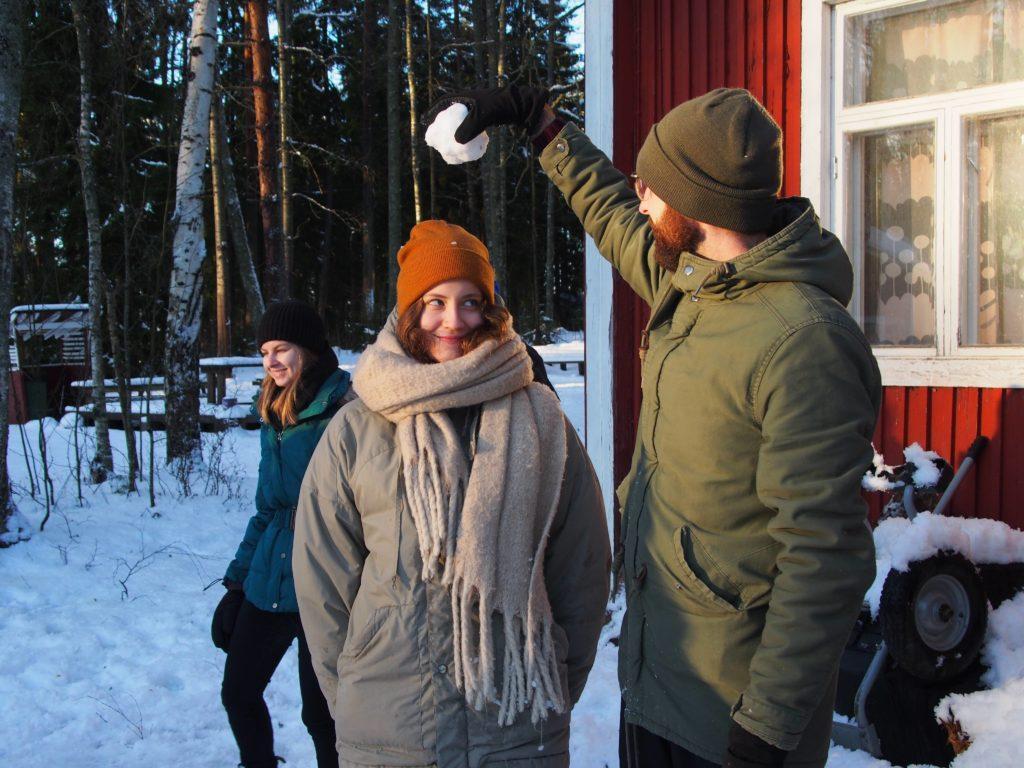
But why principles for a safer space instead of a safe space? This is because one set of principles cannot meet the requirements of everyone, and the principles may not always be followed perfectly.

The principles will be used a tool for offering better a supportive learning environment that encourages respect. Maailmanvaihto welcomes all its people to take part in defining the principles, putting them into action as well as revising them if needed.

Text: Minna Räisänen
Photos: Isaura Hernández-Navarro

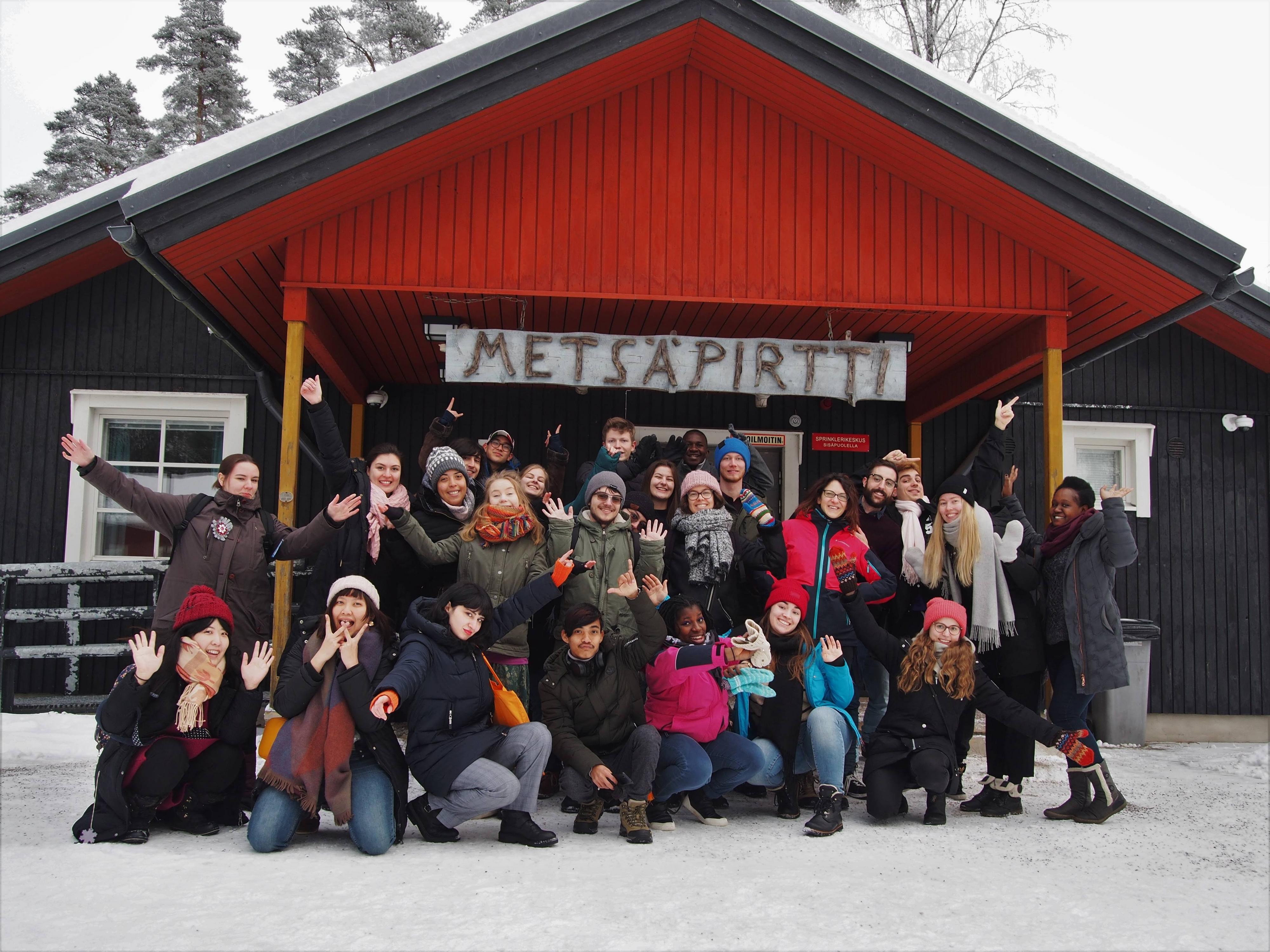
The photos are from Maailmanvaihto’s latest camp, held in January 2019. 24 volunteers spent four days in a camp center in Tuusula learning together and enjoying the crisp winter weather.

The article has been published in the magazine MaailmanVaihtoa – Volunteers’ Voices 1/2019.
Read also

MaailmanVaihtoa – Volunteers’ Voices 1/2023: Language and Communication

 In this issue Read the pdf version of the...

Keeping in touch after volunteering

The end of the international volunteering period often marks a...

Greetings from abroad: From Finland to Austria and from Taiwan to Finland

Each year Maailmanvaihto sends and receives young people for long-term...

Communication can clear the gap between generations

Pham Minh Tuan has his story to tell about a jump from Vietnam to Finland and from Millenial’s comfort zone to a house of the elderly. Let’s discover his volunteering year in Finland!

Back in 2016, when studying in college in Vietnam, Tuan was thinking about doing something boldly and differently in a meaningful way. He decided to do volunteering abroad and eventually chose Finland as a destination. Finland was familiar to Tuan since his sister had come to Finland to study long time before and he had got a chance to know Finland little by little through her stories.

Even though he had prepared himself for the cold, darkness and quietness, it still took him some time to adapt to this new life. Maybe it is not a surprise that person who comes from a warm, vibrant Vietnam with one hundred million people, got a bit of a culture shock by quietness in Finland where everybody respects the individual space of each other.

“In Vietnam, when you step outside your house in the morning, you will see a lot of people talking; neighbours greeting each other, people chatting while eating breakfast from street vendors. We usually have small talks even if we are strangers to each other”, Tuan tells.

Time went by and Tuan found for him a solution to overcome this culture barrier. That was communicating and opening up himself. By doing so, he realized that Finnish people are very warm, kind and friendly. He felt more comfortable to approach and talk with people who he worked with and met in events and streets. Tuan had learned a lesson for life: every problem can be solved by communication.

A friend for the elderly

At Palvelukoti Sofia, Tuan’s tasks included helping old people with their daily routine like eating, walking, self-cleaning. Most of all he was a friend to them.

“I started my workday at 8.15 by helping the elderly take their breakfasts. After they finished, I washed the dishes in the kitchen and moved to the second floor. There me and my colleague helped the old people in “Ryhmäkoti” where the elderly are supported also by nurses. Around lunchtime we returned to the kitchen and after finishing lunch and cleaning the kitchen, we went to Ryhmäkoti again to help the nurses. My workday used to end at 13”, Tuan tells.

Working with old people brought Tuan a pleasant experience of communicating between generations – Millennial and people of the 1930’s and 40’s. Since most of the elderly did not speak English, he had to seek help from his Finnish colleagues or from using body language in his first weeks, which sometimes caused miscommunication.

Communicating by caring

Later on, Tuan learned basic Finnish words related to his daily work in order to better communicate with the elderly. Observing Tuan trying to learn Finnish, old people were happy to teach him more. As the result, their talks improved and the topics went beyond daily routine.

“I learnt that caring is the best way of communicating with the elderly as well-being is their top concern when ageing”, Tuan tells. Thinking that way, every morning he come to work, he used to ask them how they were doing.

Tuan liked to hear the stories  of the elderly and in return  he shared his future plans and asked for valuable advice.

In Tuan’s opinion, communication between Millennial and old generations would never be hard if we thought that every old person is a book about their life waiting to be read and discovered. Therefore, he was always eager to hear stories about what they had experienced and learnt in the past. In return, he shared his future plans with them and asked for valuable advice. Voluntary period at Palvelukoti Sofia brought Tuan a lot of special memories, experiences and lessons learnt.

After a year of volunteering, Tuan decided to pursue nursing degree in Finland, which enables him to provide the care for people in need. He sends a message to all young people: “Go boldly and don’t be afraid. The world out there is waiting for you to discover it. Volunteering abroad is a once-in-a-lifetime experience you never want to miss!”

Text: Pham Diep
Photo: Tuan’s album

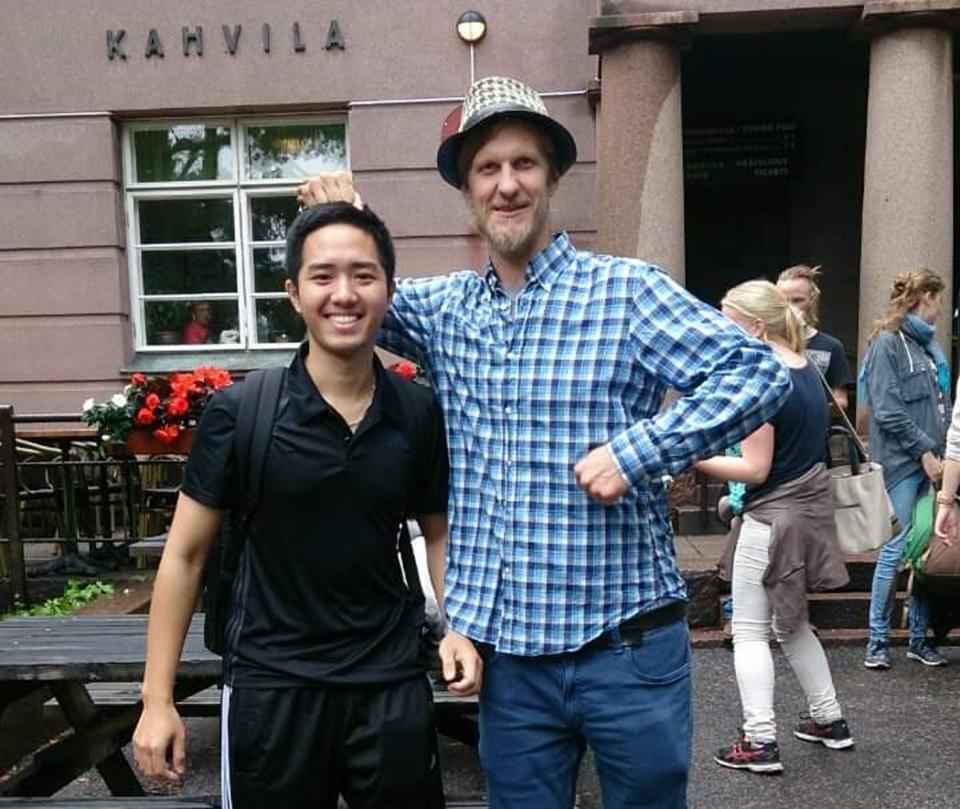
In the photo: Pham Minh Tuan travelled from Vietnam to  Finland to volunteer in an elderly care home.  Tuan (left) and Maailmanvaihto’s camp leader Markus in the on-arrival training camp in 2016.

The article has been published in the magazine MaailmanVaihtoa – Volunteers’ Voices 1/2019.

Read also

Greetings from abroad! From Taiwan to Finland

I went because... I wanted to experience a different lifestyle...

MaailmanVaihtoa – Volunteers’ Voices 1/2023: Language and Communication

 In this issue Read the pdf version of the...

Keeping in touch after volunteering

The end of the international volunteering period often marks a...

Helsinki: Become a host family for Lyhty’s young Italian volunteer!

Maailmanvaihto is looking from Helsinki for a host family for young Italian volunteer, Miriana, who arrives to Alppila, Helsinki next August.

Miriana will volunteer for a year (8/2019–8/2020) in an NGO called Lyhty which provides workshops and housing for disabled people. Miriana will assist in Lyhty’s textile workshop Luovilla situated in Alppila district. The aim of the volunteering period is to advance intercultural understanding through everyday cooperation.

Would you have space for a young volunteer in your home? Accommodating foreign volunteer is a voluntary activity, which provides a wonderful opportunity to internationalize oneself at home, improve language skills and gain new perspectives into a familiar environment.

Host family role suits for any family or person interested in getting to know a new person and their cultural background as well as ready to share their home with a new family member. Host family provides accommodation and meals for the volunteer. We are mainly looking for a family who can provide home for Miriana for the whole volunteering period, but shorter periods (e.g. four months) are possible as well.

Miriana

  • 18 years old young woman from Italy
  • volunteers in Lyhty’s textile workshop Luovilla, Helsinki 8/2019–8/2020
  • mother tongue Italian, speaks English as well
  • interested in art
  • looks forward to getting to know the local cultural environment and landscapes

Maailmanvaihto – ICYE Finland was founded in 1958. We work for promoting intercultural understanding, equality and peace. Maailmanvaihto sends young volunteers abroad and receives volunteers both from Europe and further away. The volunteers work in common-good work communities.

Interested?

If you would be interested in becoming a host family for Miriana, please read through the general information on host family activities and contact us afterwards at hosting(at)maailmanvaihto.fi.

”At least after this two months’ experience, I can highly recommend becoming host family for everyone interested seeing, hearing and experiencing more. Sometimes a jump into thee unknown can turn out to be the best thing.” – A member of host family Jaana Silvast

Read also

Practice languages in Maailmanvaihto’s Language Café

Would you like to practice speaking in Spanish or Finnish...

For young people in Finland: 11-month volunteering in Germany – education, youth work, cultural exchange & personal development at Urspring School!

Are you 18–30 and looking for a meaningful international experience...

For young people living in Finland: European projects, public relations, social media & political education workshops… apply now to volunteer in Germany!

Are you 18–30 and looking for a meaningful international experience...

For young people living in Finland: circular economy, second-hand shop, children’s aid… … apply now to volunteer in Iceland!

Hey, are you living in Finland, between 18 and 30...

My enriching experience in a Finnish Residential School

My name is Daniela Vázquez Sánchez, I am volunteering in the Sippolankoulukoti in Finland. This Residential School comprises about 50 staff taking care of 20 to 25 youngsters between 12 and 19 years old. The reasons why these youngsters live and/or study here range from mental, psychological to family problems related to sex abuse, drugs, alcoholism.

Sippola is a very little town/village located in the region of Kymenlaakso; buses are the only public transport and they are far from good because there are only two from Sippola to the nearest cities, one from the nearest cities to Sippola. This is useful for the school in order to avoid having the youngsters escape; though of course some of them still find ways of doing it.

My time at school is divided into 4 classes: 2 in the Main Building, 1 in a separate building, and 1 in the Special Care Unit, where I have spent most of my time and found to be really interesting. I have been supporting teaching English and Spanish lessons. I also led some art lessons by teaching Mexican art and cooking lessons by cooking Mexican food. I participate in the music and sports lessons, and help staff to maintain the rules of the unit, e.g. cleaning the kitchen, giving the children tools to clean the house, talking to them about all kinds of stuff… so I follow the rules and give them an example to follow.

We went swimming in the lake many times, playing badminton and exercising at the gym. There, I could experience the informal and non-formal education, while spending time with them, building a family atmosphere for and with them, talking about their problems and evaluating their tasks in order to solve them.

During summer, I still worked in that unit, doing all the home activities already mentioned, as well as cooking and of course eating with them. We went swimming in the lake many times, playing badminton and exercising at the gym. There, I could experience the informal and non-formal education, while spending time with them, building a family atmosphere for and with them, talking about their problems and evaluating their tasks in order to solve them. They have a system with written daily and weekly tasks to be discussed later during a group discussion (twice a week with lots of candies and chocolates). The aim is to treat them well, to respect their thoughts and feelings and of course to guide them according to their beliefs or wishes.

Nowadays I support 4 different classes, as I have organized my own schedule. I organized, for instance, some Spanish lessons for the only boy who wants to learn it; my mentor provided me 4 old books for Finnish people who want to learn Spanish, so I adapted the best pages I found from them and combined them with my own material. This way, I got to make a tiny syllabus to follow, and each day I wrote down the most notable progress. I have the same system for the English lessons. But for this, I use more conversation tasks. I try to make both lessons lively; I always start by saying something about me and then asking about them. I show them pictures of my hometown in Mexico, I tell them funny stories about the cultural differences I have found between Finland, Mexico and other countries I have lived in, and suddenly, they don’t notice how interested they can be in knowing about the countries’ location, or how the food looks like, and then we start some questions on cards I have already prepared.

For Arts and Home Economics lessons, I have had the chance to first show them how Art and Cuisine is in Mexico, and then we start creating our own things inspired by this Aztec, Mayan or Nahuatl influences I have. They do follow my plan, yes, because they know I support the teacher, but I also let them tell me anything they would like to have for the class. We discuss the activities they like and I give them a little feedback to improve. Teachers here do the same, and I feel proud about the fact that it is something I’ve been doing for many years already with my students in Mexico. I like how the Finnish system for Residential school works, and I like how non-formal education works no matter whether it is in Mexico or Finland; my Mexican students liked that I try to give real attention to their learning, not only to follow the syllabus. I try to make them more confident with their learning, and to cooperate with each other, which makes things easier in a large group. For that, I make smaller groups and instruct them to support each other over one month. The next month they have to work with and support another set of people I choose. It is a structure that helps them learn from different personalities.

And opposite to what some people may think, I never get bored during my free time in Finland! Staff is super kind and nice to me! They always help me when I need them, and some of them have become my friends. It has been great to have a support person in Helsinki, a support family in one of the nearest bigger towns, and one in Sippola. They are always for me to cook together, have dinner, go swimming to the lake, take me with them to their celebrations or events with family and friends, and even to pick me up somewhere and give me a lift to my home.

I dare to say my volunteering in Finland has been very enriching in many ways. It has been a very personal process that I needed before coming here.

I dare to say my volunteering in Finland has been very enriching in many ways. It has been a very personal process that I needed before coming here. I had worked as a teacher for 5 years in Mexico, and I felt kind of exhausted with all the hard work with little children and adults. This was my chance to prove to myself I can actually work well with what I consider the most difficult age group of students: teenagers. It is not the first time I am working with non-formal and informal methods, but it is something not well embraced in Mexico yet. Now I am sad to be leaving Finland soon, but happy and excited at the same time, of coming back to continue bridging this gap between formal and non-formal education.

The article has been published in the 41th issue of the World Experience (2016).

Read also

Greetings from abroad: from Finland to Switzerland, from Germany to Finland

Each year Maailmanvaihto sends and receives young people for long-term...

Keeping in touch after volunteering

The end of the international volunteering period often marks a...

ESC volunteering at Maailmanvaihto: a joint learning experience

This year, for the first time, a European Solidarity Corps...

Read also

Greetings from abroad: from Finland to Switzerland, from Germany to Finland

Each year Maailmanvaihto sends and receives young people for long-term...

Keeping in touch after volunteering

The end of the international volunteering period often marks a...

ESC volunteering at Maailmanvaihto: a joint learning experience

This year, for the first time, a European Solidarity Corps...

Lehtimäki Special Folk High School

Looking for a volunteering experience where you can learn, grow, and be part of a supportive community? At Lehtimäki Special Folk High School, you’ll work closely with people with disabilities while experiencing everyday life in the Finnish countryside. At Lehtimäki, learning happens through courses and shared daily life.

About Lehtimäki Special Folk High School

Lehtimäki Special Folk High School (Lehtimäen opisto) is a boarding school for youth and adults with disabilities.

We offer 70–80 places for students, and there are about 40 different short-term courses for youth, adults, and elderly with disabilities and their families. We offer rehabilitation courses, such as riding therapy, occupational therapy, and physical therapy. The main and primary goal of Lehtimäki Special Folk High School is to support students’ independence and overall well-being, as well as their general skills in everyday life. Some training is aimed at increasing the occupational capacities of the students, through computer literacy training, for example.

Our school builds its activities around values of respecting individuality and uniqueness of people, equality among people, participation, safety, community, and lifelong learning.

Location

Lehtimäki Special Folk High School is situated in Western Finland in the small village of Lehtimäki in Alajärvi, located about 60 km away from the city of Seinäjoki.

Volunteer’s role and tasks

As a volunteer at Lehtimäki, you will interact with students with disabilities during their lessons and leisure time, supporting them in their daily activities. You’ll also assist the kitchen staff and work at the stables, probably one day a week in the kitchen and one day at the stables.

Volunteer’s profile

  • Volunteering at Lehtimäki could suit you well if you are motivated to work with people with disabilities, have good social skills and an open attitude, and are willing to do various tasks.
  • As a volunteer, you will also be assisting at the horse stables and in horse-riding therapy, so we hope that you are interested in working with horses. Wonderful if you already have a bit of experience with horses, but it’s not a requirement if you are motivated to learn.
  • We also appreciate a musical background.
  • Living in a small countryside village is part of the experience.

Practical Arrangements

  • Accommodation: The volunteers will live in an apartment in the campus area. It may be that the volunteer will be sharing the apartment with people of different gender.
  • Food: Meals are provided by the school restaurant. When the restaurant is closed during weekends and holidays, the volunteers will receive a food package.
  • Transportation: Lehtimäki is situated in the countryside. The only public transportation nearby is one bus during the weekends to the nearest city Seinäjoki. The volunteers will get reimbursement for one weekly return trip between Seinäjoki and Lehtimäki, and the staff might also assist with moving around in the area.
  • Free time:
    • 2 days off per week
    • 2 vacation days per month

Training during the activity

The volunteers will have an on-arrival training camp and mid-term evaluation camp organized by the Finnish National Agency of the European Solidarity Corps. In addition, they will be invited to the on-arrival training camp and mid-term evaluation camp of the coordinating organisation Maailmanvaihto – ICYE Finland.

The volunteers will also get access to the Online Language Support (OLS) tool of the European Solidarity Corps to help them learn Finnish.

Accessibility

Lehtimäki Special Folk High School, unfortunately, cannot host volunteers with physical or sensory disabilities. If you need additional support due to a long-term illness or other reason and would like to discuss if volunteering at Lehtimäki could suit you, please don’t hesitate to contact us for further information via Maailmanvaihto – ICYE Finland at esc@maailmanvaihto.fi. We’ll be happy to tell you more!

Activity topics

education and training, disabilities, inclusion

How to apply?

Further information

  • If you wish to ask something, please, see answers to frequently asked questions and European Solidarity Corps program page.
  • If you don’t find an answer to your question, please contact us at Maailmanvaihto at esc@maailmanvaihto.fi. Do not contact the voluntary workplace directly.
  • Please note that you can only apply for the open position through Maailmanvaihto – ICYE Finland by following the application instructions linked above.

Volunteers’ experiences

Volunteer Valentina intruduces volunteering in Lehtimäki >> See the video in Instagram or >> See the video in TikTok

“Volunteering at Lehtimäen opisto has given me so much more than I’d hoped for. I was hoping for fulfilling work, yes, but I hadn’t expected it to give me so much joy. The people (students and staff members) are just lovely and the horses so cute. Plus there is an affectionate stable cat!

The remote location of the project is definitely something to take into consideration, because – while opisto is in the centre of Lehtimäki – there isn’t much to do around. On the weekend there are busses to Seinäjoki (from where bus and train connections are pretty good), but otherwise you should be able to make your own entertainment. If that is something you’re good at however, and you love peace, nature, and want to work with people with all kinds of disabilities, this is a lovely place :)” – Yara

Read also

Aitoo Vocational College

Would you like to learn through everyday encounters while supporting...

Nicehearts

Are you interested in organizing group activities and events? Would...

Dagtek Life Skills

Are you excited about connecting with people, organizing engaging activities,...

Myllylähde Community

Would you like to support adults with special needs while discovering a new culture and living close to nature? Join us at Myllylähde, a warm, inclusive community where everyone contributes and belongs.

  • Volunteering period: 12.8.2025–11.8.2026 (12 months)
  • Positions available: 1
  • Please note that the position is for a female candidate. The volunteer will be accommodated together with another female candidate.
  • Apply as soon as possible!

MYLLYLÄHDE (Myllylähde-yhteisö in Finnish) is a village community providing accommodation and work activities for adults with special needs. It is part of the International Camphill movement which was established to create participatory and inclusive communities for people with special needs, like learning disabilities.

The community members cooperate and work together sharing the different tasks, such as household tasks, arts & crafts workshop activities, gardening, and ecological farming. In Camphill communities, each person contributes according to their abilities towards the well-being of their fellows. The community is based on general Christian values and principles.

The work of Myllylähde consists of biodynamic agriculture, animal care, gardening, packing of agriculture products and weavery and handicrafts workshops. All work is done together with adults with special needs.

Location

Myllylähde community is situated in Southern Finland in the village Hämeenkoski, about 30 km away from the city Lahti. Myllylähde is located in a rather remote place in the countryside. It is surrounded by beautiful nature, forests, and fields. The distance to the village center of Hämeenkoski is about 7 km.

Volunteer’s role and tasks

As a volunteer at Myllylähde, you will help with all the activities of the community according to your skills and abilities. You will socialize and co-work with the people with special needs and support them in the community’s daily functions and practical tasks like cooking and cleaning. You can also introduce your cultural background and language(s) to the members of the community.

Life in the community changes according to the seasons, and so do the tasks of the volunteer as well. From spring to autumn, there is a lot of agricultural work and in the winter, there is more work in the workshops.

Volunteer’s profile

Volunteering at Myllylähde could be for you if you are motivated to live in the countryside and are interested in working with people with special needs. Interest in a communal way of living and nature is also helpful.

Accommodation, food, transportation, and days off & holidays

The meals and accommodation are provided by the Myllylähde community. The volunteers have their room in one of Myllylähde’s three houses. The volunteers share the kitchen and hygienic facilities with the other community members.

Transportation: Volunteers live and work at Myllylähde, so they don’t need to commute daily. Myllylähde is situated in the countryside, and there is no public local transport nearby – the nearest bus stop is about 7 km distance. The volunteers will get reimbursement for one weekly return trip to the nearest city, Lahti. Also, the staff will give the volunteers a lift whenever possible.

Days off and holidays: The volunteers will have 2 days off per week and will be entitled to 2 holiday days a month.

Training during the activity

On-arrival and mid-term evaluation camp: The volunteers will have an on-arrival training camp and mid-term evaluation camp organised by the Finnish National Agency of the European Solidarity Corps. In addition, they will be invited to the on-arrival training camp and mid-term evaluation camp of the coordinating organisation Maailmanvaihto – ICYE Finland.

Online Language Support tool: The volunteers will get access to the Online Language Support (OLS) tool of the European Solidarity Corps to help them learn Finnish.

Accessibility

The environment at Myllylähde unfortunately is not suitable for moving around with a wheelchair.

If you need additional support due to another kind of disability, a long-term illness or other reason and would like to discuss if volunteering at Myllylähde could suit you, please don’t hesitate to contact us for further information via Maailmanvaihto – ICYE Finland at esc@maailmanvaihto.fi. We’ll be happy to tell you more!

Activity topics

Disabilities, wellbeing, inclusion, agriculture

How to apply?

Further information

Volunteers’ Experiences

Mohammad: Volunteering, Farming, and Community at Myllylähde

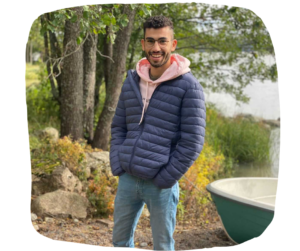
“Hi, I am Mohammad Anoun from Aleppo, Syria, and I am a volunteer at Myllylähde Community, a small village and farm surrounded by forests and beautiful green spaces, located in the countryside of Hollola, about 30 kilometers from the city of Lahti.

At Myllylähde, we live together as volunteers and staff alongside villagers with special needs, where we all collaborate in performing various daily tasks.

My role as a volunteer includes outdoor work, where I help in the fields during the harvest season. We gather a variety of vegetables and fruits such as potatoes, pumpkins, beans, beets, carrots, and apples. I also participate in planting crops during the spring and taking care of the soil to ensure a good farming season. Additionally, I help with packaging products such as vegetables, oats, and flour.

I have fixed daily tasks that I assist with, such as feeding cows, horses, and cats, as well as cleaning the horse stables and changing the water. In winter, our tasks vary to include cutting trees and turning them into firewood using a special machine or an axe, then packing them into large bags ready for sale. We also spend time in the candle-making workshop, where we make candles while enjoying the warmth indoors, alongside the villagers and supporting them.

I love working at Myllylähde Community and truly enjoy it. If you are a nature lover, appreciate tranquility, and enjoy agricultural work, you won’t regret this experience. Here, everyone takes care of each other, and as long as you have the courage to endure the cold and darkness of winter, along with the passion and dedication to help people with special needs, I am sure you will enjoy your time here!”

Read also:

Learning in a village community

Une année finlandaise


Read also

Aitoo Vocational College

Would you like to learn through everyday encounters while supporting...

Nicehearts

Are you interested in organizing group activities and events? Would...

Dagtek Life Skills

Are you excited about connecting with people, organizing engaging activities,...

Volunteering in the Mystic Place of Koli

I have been volunteering here in Finland for one month now and I will narrate for you the beginning of my extraordinary adventure in Koli, one of the national parks of Finland. My volunteering period began the 6th of January when I arrived in Helsinki before moving to Koli, my home for ten months. A new experience in a new country, a new culture in which people do not speak my language.

This is a kind of a challenge for me, because in France we just speak French, not English. But I am here to improve my English and also to discover the splendid nature of Finland while offering my help and skills. I can once again test my adaptation capacity, a hard but educational and rich exercise.

This project is totally different from the previous volunteering I have done in Madagascar. For instance, the climate differs, and the cultural environment in Africa is a unique one. Volunteering in Madagascar was the best experience in my life: I discovered a wonderful country with generous people and an amazing way of life in spite of all problems the country has with the poverty.

After returning from Madagascar, my only wish was to go abroad again and share my experience with new people while discovering a new culture. I had this opportunity to go to Finland, and since I have skills in landscape layout and I love nature and hiking, after deep reflection, I decided to take on this project.

I have different tasks here in the magical winter universe of Koli as well as at the cafeteria of the nature center Ukko. I help to organize events and to develop smalls projects. I also propose new ideas, help in outside work etc. Trough volunteering here I can try many things, test new activities and of course meet new people.

I think that it is important to go abroad and see with your own eyes the cultural differences and similarities and the context, and it is better when you can work with local people. With all these elements, everything makes sense for me because you can analyze and compare different ways of doing and learn – a real opportunity for creating souvenirs, learning by doing and discovering yourself much more.

The beginning of my experience was not simple, I was a little bit lost because I did not know this type of environment: the very cold weather, the Finnish language, being alone in a middle a nowhere. At first I felt frustration and loneliness but I was prepared for that, I knew that I should carry on volunteering even with these feelings.

After a few days, a few weeks, it already felt so relaxing to just enjoy the silence and admire the color of the trees, feel the freshness of the pure air, hear the taping of woodpeckers and gaze at the magnificent landscape of lake Pielinen. It is so appreciable to feel the purity and to see the light of the sun come brush the tree branches, a calming feeling for me. Koli, a particular place which has many stories and legends and special wildlife, where you can see a fabulous landscape change over the seasons, a perfect place for enjoying the nature.

That was the beginning of my story here, a beginning full of discoveries and personal feelings. After a few weeks I had an occasion to meet new people in Koli and students in Joensuu. With them I talked about the Finnish and French culture and language, tried the sauna and also drove snowmobile in the forest to collect firewood! I am now feeling happy to be here, I can experience new activities like snowshoes hiking or ice fishing and make the most of a fire while talking with friends in a snow-covered meadow. Now I know that I will meet a lot of extraordinary people and I have got many things to do and much to learn about the local culture. I am sure that I will hear incredible stories.

This adventure is unique to me and will be full of surprises for sure. Nine months to enjoy the country and Finnish people!

Simon Le Cléach

The story has been published in the Worlds of Experience Newsletter No. 48 the newsletter of the ICYE Federation.

Simon participates in Finland in the Eramus+ Volunteering – which has changed into European Solidarity Corps (ESC) Volunteering. Maailmanvaihto receives ESC volunteers for periods of 6–12 months. Would you be interested in participating? Read more and apply!

Read also

Greetings from abroad: from Finland to Switzerland, from Germany to Finland

Each year Maailmanvaihto sends and receives young people for long-term...

Keeping in touch after volunteering

The end of the international volunteering period often marks a...

ESC volunteering at Maailmanvaihto: a joint learning experience

This year, for the first time, a European Solidarity Corps...